Kawagoe in the Rain: Indoor Stops & a Flexible Day Plan
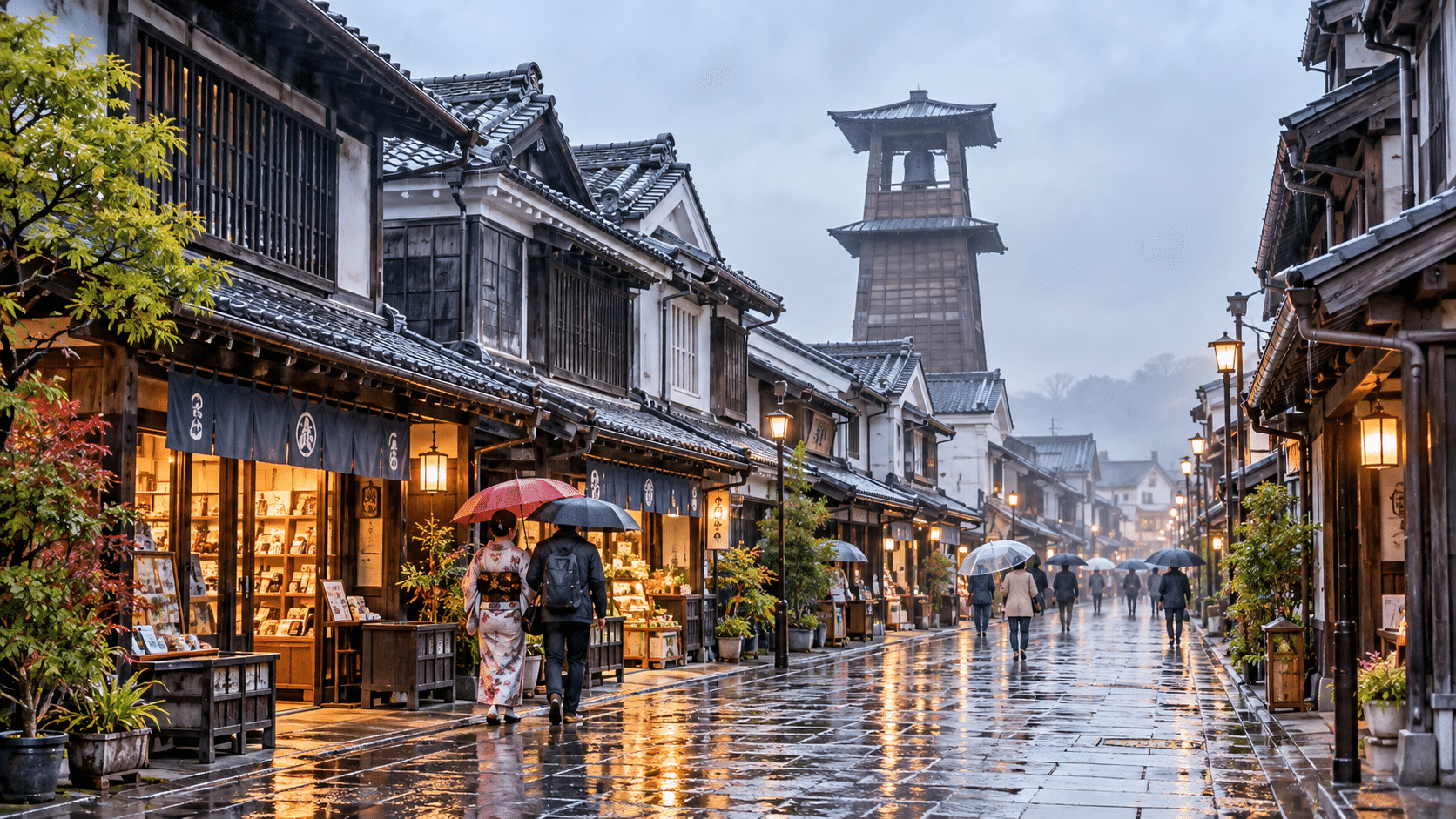
Visiting Kawagoe in the rain can still be rewarding if you build the day around a museum, a seated meal and short outdoor stretches. The mistake is trying to follow a full walking itinerary unchanged: the warehouse streets, Candy Alley and shrine approaches are outdoor sights, and moving between them takes time in wet weather.
This guide helps you choose between two manageable areas: the old town around the Festival Museum, or the City Museum and Art Museum near the castle remains. Use it as a weather alternative to our Kawagoe day-trip itinerary, rather than a checklist of everything to see.
Practical information checked on 6 October 2026 against the official sources linked below. Visit durations and meal allowances are planning estimates, not bookings or quoted menu prices.
Table of Contents
Quick Answer: Is Kawagoe Worth Visiting in the Rain?
Yes, for light or moderate rain—provided your chosen indoor attraction is open. Allow roughly three to five hours in Kawagoe, choose one main area and treat extra sightseeing as optional. If sustained heavy rain or transport disruption is forecast, moving the trip to another day is a better choice than spending most of it getting between stops.
- For a short first visit: pair Kawagoe Festival Museum with lunch and a café in the old town.
- For more time indoors: combine Kawagoe City Museum and Kawagoe City Art Museum, checking both exhibition calendars first.
- For Monday: check the Festival Museum before setting off; the City Museum, Art Museum and Honmaru Goten normally close on Mondays, with holiday exceptions.
- For mobility needs: check the specific venue and transport route. “Indoor” does not mean the whole journey is covered or step-free.
Indoor Stops: What to Choose and What It Costs
Choose the experience first, then fit the route around it. These venues are separate buildings; none creates an entirely covered walking circuit.
| Stop | Best reason to choose it | Standard adult admission |
|---|---|---|
| Kawagoe Festival Museum | Festival floats and visual displays in the old town | ¥300 |
| Kawagoe City Museum | Local history near the castle area | ¥200 |
| Kawagoe City Art Museum | A slower gallery visit | ¥200 for the permanent collection; special exhibitions vary |
| Kawagoe Castle Honmaru Goten | Historic rooms and surviving palace architecture | ¥100 |
Admission sources: Festival Museum, City Museum, Art Museum and Honmaru Goten. Student and child rates differ; use each venue’s official information when budgeting for a family.
Kawagoe Festival Museum: the easiest old-town anchor
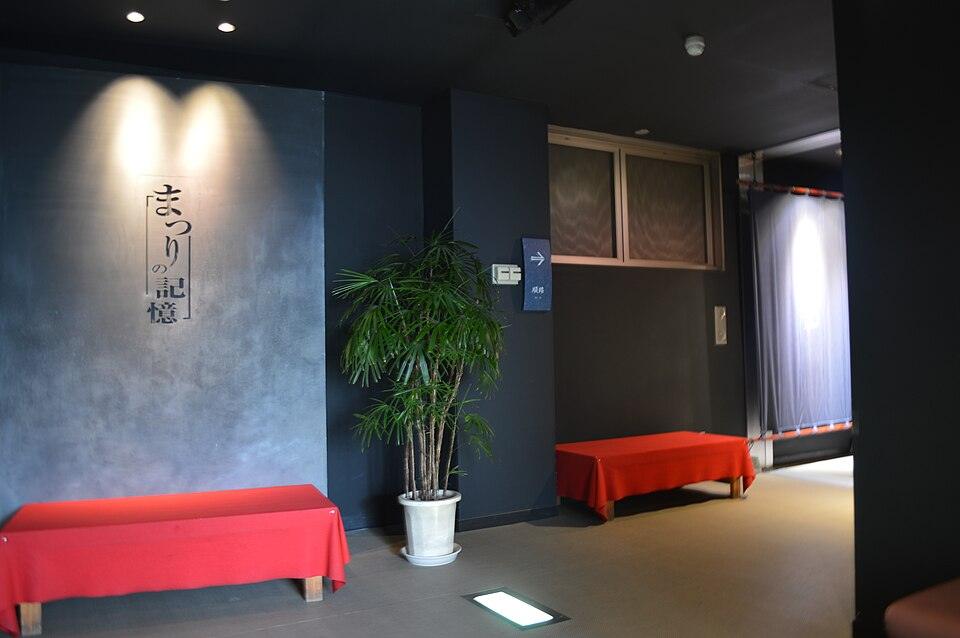
At 2-1-10 Motomachi, the Festival Museum displays two real festival floats and screens festival footage. It gives you something substantial to see even when outdoor photography is unappealing. Allow around 45–60 minutes as a flexible planning estimate; check the official schedule if a live demonstration matters to you.
The official opening hours are 9:30–18:30 from April to September and 9:30–17:30 from October to March, with final entry 30 minutes before closing. This makes it useful for a later indoor stop, but verify exceptional closures before travelling.
City Museum and Art Museum: a pair for a wetter day
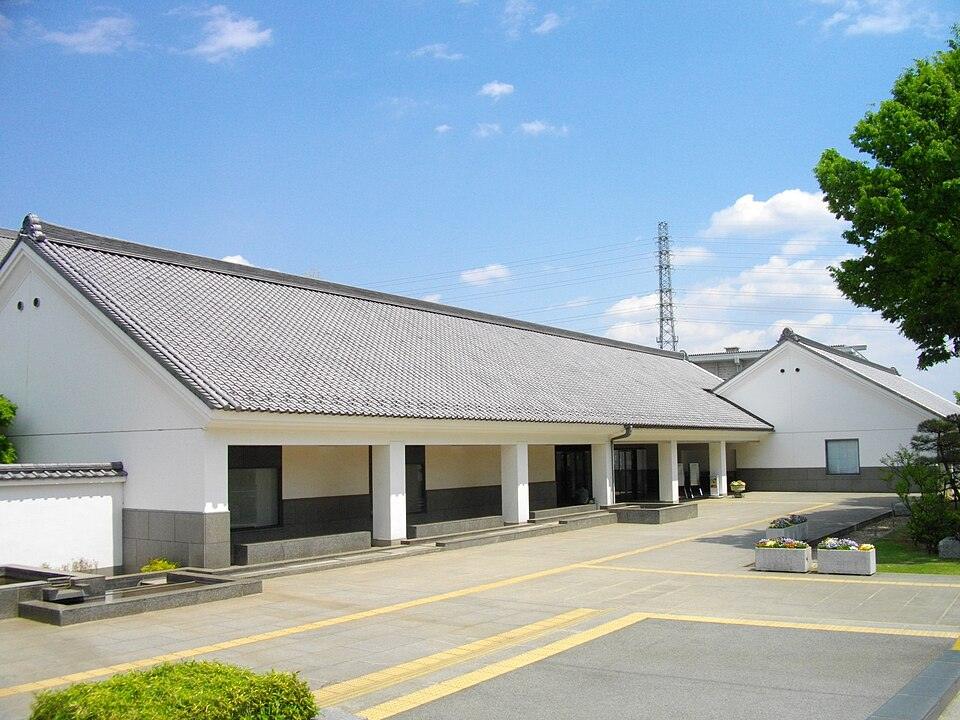
Both museums list their address as 2-30-1 Kuruwamachi. They make a useful pair if your priority is a longer indoor visit rather than shopping along the main warehouse street. Allow roughly 60–90 minutes for the history museum and 45–60 minutes for the art museum, adjusting to the exhibitions and your interests.
Both open 9:00–17:00, with last admission at 16:30. At the Art Museum, the ¥200 price covers the permanent collection; a special exhibition may cost more. Check what is actually on display rather than assuming every gallery is available between exhibitions.
If visiting both, ask about the ¥300 adult two-museum ticket instead of paying ¥200 at each entrance. Confirm that the galleries you want are included before buying.
Honmaru Goten: an optional architecture stop
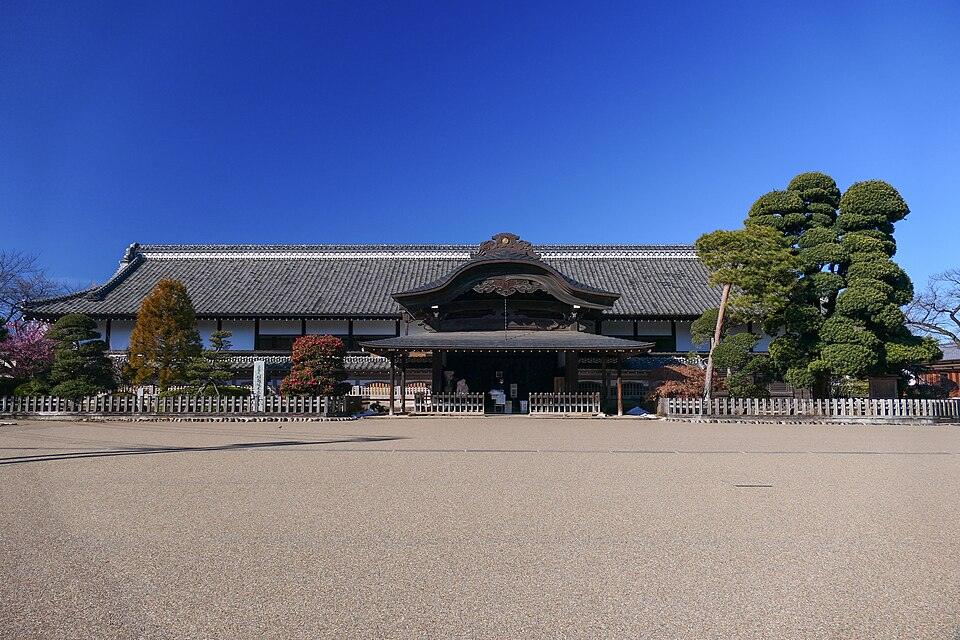
Kawagoe Castle’s Honmaru Goten is at 2-13-1 Kuruwamachi, close to the museum area. The surviving entrance section and reconstructed retainers’ rooms offer a different experience from a conventional exhibition. Opening hours are 9:00–17:00, with entry until 16:30.
Treat it as an optional addition if the rain eases and you still have energy. It is a historic building, and the city flags steps, stairs and narrow passages among its access information. Check suitability in advance if you need a step-free visit; do not assume it offers the same conditions as a modern gallery.
Check Closing Days Before You Leave Tokyo
A rainy-day plan needs a confirmed indoor anchor. Checking only the weather can leave you outside a locked museum.
- Festival Museum: normally closed on the second and fourth Wednesdays; when that is a public holiday, closure moves to the following day. Also closed 29 December–1 January and on exceptional closure dates.
- City Museum and Honmaru Goten: normally closed Mondays (the following day when Monday is a holiday), the fourth Friday except holidays, and 29 December–3 January. Check temporary closures too.
- Art Museum: normally closed Mondays (Tuesday when Monday is a holiday), 29 December–3 January and during special maintenance periods.
Use the current City Museum calendar, Art Museum visitor information and Festival Museum notices. The municipal Japanese information has been updated more recently than some English summaries, so compare the dates when they disagree.
On a normal Monday, the Festival Museum can be a useful alternative to the municipal museum area. On the second or fourth Wednesday, reverse that choice if the other museums are open. During year-end closures, avoid building the trip around museums at all.
Getting There and Reducing Time in the Rain
Choose the station that fits your departure point
From Ikebukuro, use the Tobu Tojo Line to Kawagoe. From Seibu-Shinjuku, the Seibu Shinjuku Line reaches Hon-Kawagoe. JR services also connect Shinjuku and Kawagoe; check whether your selected departure runs through or needs a change. Our Tokyo-to-Kawagoe transport guide compares the options.
Kawagoe, Kawagoeshi and Hon-Kawagoe are different stations. Save the station name for your return journey, especially if a navigation app suggests a different route home. Avoid a long station-to-old-town walk simply because it appears in a fair-weather itinerary.
Use local buses selectively
From Kawagoe Station, Tobu’s Kawagoe bus information links to the current route map and timetable. Services through the warehouse district and the sightseeing loop serve different stop patterns, so choose the bus by destination rather than boarding the first vehicle marked “Kawagoe.”
For the museum and castle area, look for Hakubutsukan-mae (博物館前) on Tobu’s sightseeing service. The city also lists Hakubutsukan / Bijutsukan-mae (博物館・美術館前) for Eagle Bus. They are different operators: a pass for one should not be assumed valid on the other.
Tobu’s current Koedo Kawagoe one-day bus ticket costs ¥500 for adults and ¥250 for children. It covers its sightseeing loop and designated sections of regular Tobu routes. It is not sold during the Kawagoe Festival or 31 December–3 January. Compare the single fares for the rides you will actually take; a day pass is not automatically the cheapest option.
Bus queues, the walk to a stop and the final approach to an entrance may still be outdoors. Keep some time in reserve, and choose a taxi or an earlier return if the extra transfer would make the day uncomfortable.
A Flexible Rainy-Day Plan
The following times are an example, not a timetable. Start later if needed and remove a stop rather than rushing. Check the chosen café’s opening day before relying on it as shelter.
Option A: a short old-town visit
| Approximate time | Plan |
|---|---|
| 10:30 | Arrive in Kawagoe and travel to the old-town area. |
| 11:00 | Visit the Festival Museum, if open. |
| 12:00 | Have a seated lunch nearby. |
| 13:00 | Take a short warehouse-street walk if the rain eases; otherwise go directly to your café. |
| 14:00 onward | Return to the station, or add one short stop if conditions are comfortable. |
For lunch ideas, use our Kawagoe food guide. Prioritize a place with indoor seating rather than trying to eat several takeaway snacks while holding an umbrella. For the café stop, our Kawagoe coffee guide explains which venues are sit-down cafés and which are compact stands. A small espresso stand is not a reliable place for a long rain break.
Option B: spend longer in the museum area
Start with the City Museum, then the Art Museum if its current exhibition appeals. Leave a proper break for lunch rather than assuming the museums provide a full meal. Add Honmaru Goten only if conditions and access suit you. This is a different day from the old-town route; you do not need to add Candy Alley and every shrine to make the trip worthwhile.
If the rain eases
Choose one outdoor extension. Toki no Kane fits an old-town visit; Kawagoe Hikawa Shrine makes more sense when you are already exploring the northern part of town. Kitain Temple deserves its own time allowance and opening-hours check. These are optional extensions, not covered attractions.
What to Budget for a Rainy Day
Separate published admission prices from personal spending. For a short old-town visit, the Festival Museum plus a Tobu day ticket comes to ¥800 per adult, if the pass suits your rides. Add your Tokyo return rail fare, lunch and café order.
For the museum-area option, the two-museum ticket is ¥300. The three-venue ticket adds Honmaru Goten for ¥370; the four-venue ticket including the Festival Museum is ¥600. Those tickets cover the Art Museum’s permanent collection, not automatically its special exhibitions. The city says common tickets remain valid for six months, so there is no need to visit every included attraction on the same rainy afternoon. See official combined-ticket details.
Suggested spending allowance, not quoted prices: set aside about ¥1,000–¥2,000 for lunch and ¥500–¥1,000 for a drink or café break, then check actual menus before ordering. Carry an additional reserve for a taxi, umbrella or change of plans. Shopping and extra sweets are separate.
Small Choices That Make a Wet-Weather Visit Easier
- Pack for the transitions. Bring a compact umbrella, a water-resistant bag and a small towel. Spare socks are useful if your shoes get wet.
- Handle umbrellas at the entrance. Follow the venue’s umbrella-storage instructions and avoid dripping water onto displays or seating.
- Choose footwear for wet paving. Keep your hands free where possible and slow down at steps and crossings.
- Keep bags manageable. Do not assume a small café or historic building can store a suitcase. Check your station’s storage options before heading into the old town.
- Respect small cafés. Buy an order, follow seating limits and avoid treating a tiny shop as an all-afternoon waiting room when others are queuing.
- Keep a short return option. Save your destination and return station in your map app before leaving a dry stop. Recheck rail service if the weather worsens.
For families, one engaging museum and a proper lunch may work better than several short admissions. Keep snacks for permitted areas and ask staff about buggy storage or accessible entrances rather than assuming all areas can accommodate a stroller.
If you can move the trip, our Saitama seasonal guide helps you think about another date. For a different indoor-focused outing, compare the Railway Museum in Saitama, checking its own reservation and closing-day rules before switching plans.
Final Thoughts
A good rainy day in Kawagoe is a smaller, more deliberate visit: one confirmed indoor attraction, a seated meal and a café or short walk nearby. Choose the old town for a compact first visit, or the museum area for more indoor time. Leave room to change your mind when you step outside.