
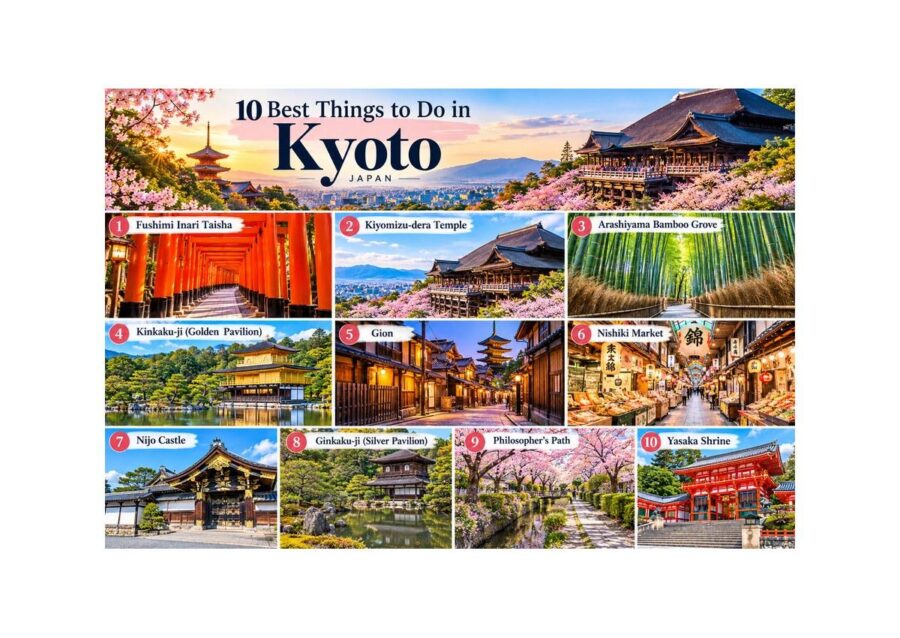
10 Best Things to Do in Kyoto, Japan (2026 Travel Guide)
Kyoto is one of Japan’s most memorable destinations, known for its historic temples, traditional streets, peaceful gardens, and beautiful seasonal scenery. Once Japan’s imperial capital, the city offers a fascinating contrast between centuries-old traditions and modern Japanese life.
Whether you’re visiting Japan for the first time or returning to explore somewhere new, Kyoto deserves a place on your itinerary.
In this guide, discover 10 of the best things to do in Kyoto, along with practical transportation advice, suggested visiting times, a three-day itinerary, and useful tips to help you plan your trip.
Table of Contents
1. Walk Through the Red Torii Gates at Fushimi Inari Shrine
Best for: Photography, culture, hiking, and iconic Kyoto scenery
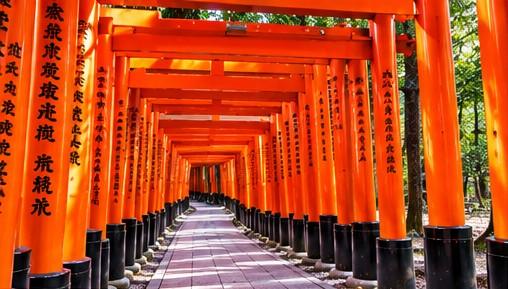
Fushimi Inari Taisha is one of Kyoto’s most recognizable landmarks. Thousands of vermilion torii gates line wooded paths that climb Mount Inari, creating an unforgettable walking experience.
The shrine is dedicated to Inari, a deity associated with rice, prosperity, and business. Along the paths, you’ll also notice fox statues, traditionally regarded as Inari’s messengers.
What to do:
- Walk through the famous Senbon Torii gate tunnels.
- Explore smaller shrines along the mountain paths.
- Continue uphill for quieter surroundings and viewpoints.
- Photograph the gates while respecting other visitors.
How to get there: Take the JR Nara Line from Kyoto Station to Inari Station. The shrine entrance is a short walk away.
Suggested time: 1–2 hours for the lower shrine area, or 2–3 hours or longer if hiking farther uphill.
2. Visit Kiyomizu-dera Temple
Best for: Historic architecture, panoramic views, and seasonal scenery
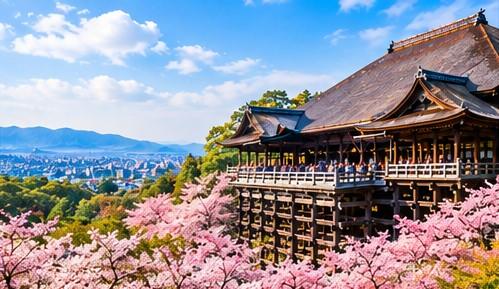
Kiyomizu-dera is a celebrated Kyoto temple famous for its large wooden stage overlooking the surrounding hills and city.
The temple is particularly beautiful during cherry blossom season and autumn, when the landscape transforms with pink flowers or colorful leaves.
One of the highlights is walking through the surrounding Higashiyama district, where narrow streets, souvenir shops, traditional buildings, and small restaurants create a distinctly Kyoto atmosphere.
What to do:
- Admire the view from the temple’s wooden stage.
- Explore the temple grounds.
- Walk through Sannenzaka and Ninenzaka.
- Try traditional Kyoto sweets in nearby shops.
How to get there: Take a bus toward the Kiyomizu-michi or Gojo-zaka area, then walk uphill. Walking from the Gion area is another option.
Suggested time: 1.5–2.5 hours, including the surrounding streets.
3. Explore Arashiyama Bamboo Grove
Best for: Nature, photography, and a peaceful morning walk
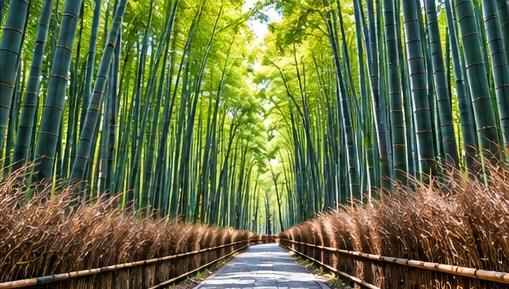
Arashiyama is a scenic district in western Kyoto known for its bamboo grove, riverside views, temples, and mountain scenery.
Walking through the towering bamboo is a memorable experience, although the most photographed path is relatively short.
Rather than visiting only the bamboo grove, make time to explore the surrounding district.
What to do:
- Walk through the bamboo grove.
- Visit nearby Tenryu-ji Temple.
- Cross Togetsukyo Bridge.
- Enjoy the riverside scenery.
- Explore small cafés and local shops.
How to get there: Take the JR Sagano Line from Kyoto Station to Saga-Arashiyama Station, then walk to the bamboo grove.
Suggested time: Half a day for the wider Arashiyama area.
4. Admire the Golden Pavilion at Kinkaku-ji
Best for: Japanese gardens, architecture, and scenic photography
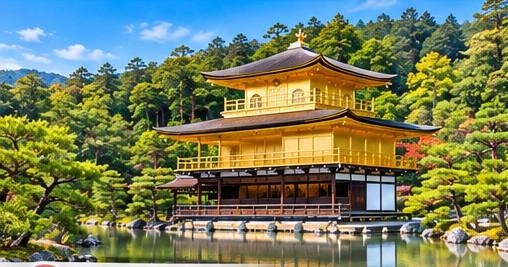
Kinkaku-ji, also known as the Golden Pavilion, is one of Kyoto’s most famous temples.
Its gold-covered upper stories reflect beautifully in the surrounding pond, creating one of Japan’s most recognizable views.
Visitors follow a designated route through the grounds, enjoying different perspectives of the pavilion and its landscaped garden.
What to do:
- Photograph the pavilion across the pond.
- Walk through the traditional garden.
- Observe the seasonal changes in the surrounding trees.
How to get there: Use Kyoto city buses or other public transport connections from central Kyoto. The temple is not directly beside a major train station.
Suggested time: 45–90 minutes.
5. Discover Traditional Kyoto in Gion
Best for: Historic streets, traditional architecture, and evening walks
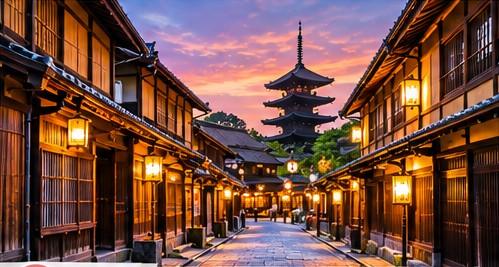
Gion is Kyoto’s famous traditional entertainment district, known for wooden machiya buildings, teahouses, restaurants, and atmospheric streets.
It is also associated with Kyoto’s geiko and maiko traditions.
Walking through Gion gives visitors a glimpse of the city’s historic atmosphere, especially around Hanamikoji and the nearby Yasaka Shrine area.
What to do:
- Explore public streets lined with traditional buildings.
- Visit Yasaka Shrine.
- Walk toward the Shirakawa canal area.
- Enjoy a traditional Japanese meal or dessert.
How to get there: Gion-Shijo Station on the Keihan Line and Kyoto-Kawaramachi Station on the Hankyu Line are convenient access points.
Suggested time: 1–2 hours, or longer if dining.
6. Explore Nishiki Market and Taste Kyoto Food
Best for: Food lovers, local specialties, and souvenir shopping
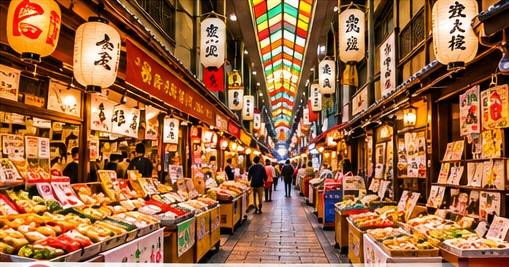
Nishiki Market is a covered shopping street in central Kyoto, filled with vendors selling local foods, produce, pickles, sweets, and specialty ingredients.
It’s a great place to discover the flavors of Kyoto while learning about its culinary traditions.
Foods worth trying:
- Yuba, or tofu skin.
- Kyoto-style pickles known as tsukemono.
- Matcha sweets and desserts.
- Traditional Japanese snacks.
- Seasonal specialties offered by local shops.
How to get there: The market is within walking distance of central shopping areas near Shijo and Kawaramachi.
Suggested time: 1–2 hours.
7. Visit Nijo Castle
Best for: Japanese history, architecture, and landscaped gardens
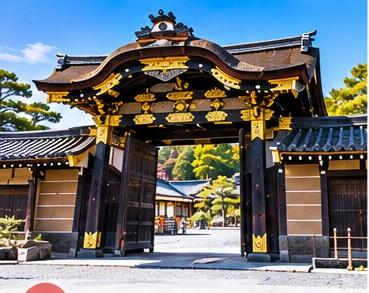
Nijo Castle offers a fascinating look into Japan’s shogunate era.
Originally built in the early 17th century, the complex is especially known for its elaborate palace interiors, decorative artwork, and traditional gardens.
A visit provides historical context that complements Kyoto’s many temples and shrines.
What to do:
- Explore the palace areas open to visitors.
- Learn about the Tokugawa shogunate.
- Walk through the landscaped grounds.
- Enjoy seasonal flowers and foliage.
How to get there: Nijojo-mae Station on the Tozai Subway Line is convenient.
Suggested time: 1.5–2 hours.
8. Walk the Philosopher’s Path
Best for: Relaxing walks, cherry blossoms, and quieter Kyoto scenery
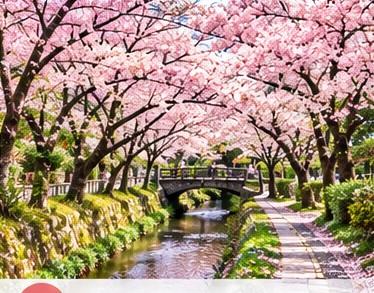
The Philosopher’s Path is a scenic walking route along a canal in eastern Kyoto.
The path is especially popular during spring, when cherry trees bloom along the water, but it can be pleasant in other seasons too.
The route connects well with nearby temples and smaller neighborhoods, making it a good choice for travelers who prefer exploring on foot.
What to do:
- Enjoy a leisurely canal-side walk.
- Stop at small cafés and shops.
- Explore nearby temples.
- Photograph seasonal scenery.
How to get there: Access the route from the Ginkaku-ji area or its southern end near Nanzen-ji.
Suggested time: 1–2 hours, excluding temple visits.
9. Visit Yasaka Shrine and Maruyama Park
Best for: Culture, seasonal scenery, and an easy central Kyoto stop
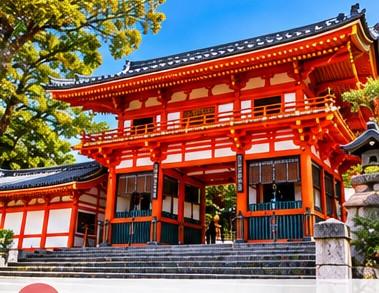
Yasaka Shrine is an important shrine near Gion and a convenient stop while exploring eastern Kyoto.
Behind the shrine lies Maruyama Park, a popular place for strolling and enjoying seasonal scenery.
The park is particularly famous during cherry blossom season, when visitors gather to admire its flowering trees.
What to do:
- Explore Yasaka Shrine.
- Walk through Maruyama Park.
- Enjoy seasonal flowers.
- Continue toward Gion or Higashiyama.
How to get there: Walk from the Gion-Shijo area or use public transportation to nearby stops.
Suggested time: 45–90 minutes.
10. Discover the Peaceful Gardens of Ginkaku-ji
Best for: Zen-inspired gardens, traditional landscapes, and cultural exploration
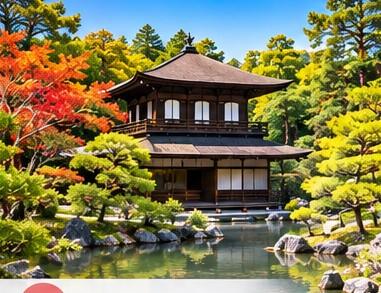
Ginkaku-ji, often called the Silver Pavilion, is known for its elegant temple grounds, sand garden, moss-covered landscapes, and wooded hillside paths.
Unlike the Golden Pavilion, its main building is not covered in silver.
The peaceful atmosphere and carefully maintained gardens make it a rewarding stop for visitors interested in traditional Japanese aesthetics.
What to do:
- Admire the sand and moss gardens.
- Walk along the hillside paths.
- Enjoy views over the temple grounds.
- Continue to the Philosopher’s Path.
How to get there: Travel toward the Ginkaku-ji area by bus, then walk to the temple.
Suggested time: 1–1.5 hours.
3 Day Kyoto Iterinary
Kyoto’s attractions are spread across different districts. Grouping nearby sights together will help you avoid spending too much time traveling between locations.
🌅 Morning
- Visit Kiyomizu-dera.
- Explore Sannenzaka and Ninenzaka.
☀️ Afternoon
- Walk toward Yasaka Shrine.
- Explore Maruyama Park.
- Enjoy lunch or a tea break.
🌙 Evening
- Explore Gion’s public streets.
- Enjoy dinner around Gion or Kawaramachi.
🌅 Morning
- Visit Arashiyama Bamboo Grove.
- Explore Tenryu-ji and Togetsukyo Bridge.
☀️ Afternoon
- Travel to Kinkaku-ji.
- Explore the temple gardens.
🌙 Evening
- Return to central Kyoto for dinner.
🌄 Early Morning
- Visit Fushimi Inari Shrine.
☀️ Late Morning & Afternoon
- Explore Nijo Castle.
- Have lunch near central Kyoto.
- Visit Nishiki Market.
🌙 Evening
- Enjoy shopping or a relaxed final dinner.
Alternative: If you prefer gardens and quieter walking routes, replace part of the afternoon with Ginkaku-ji and the Philosopher’s Path. These eastern Kyoto attractions require additional travel time, so avoid trying to fit everything into one day.
Best Time to Visit Kyoto
Kyoto is worth visiting throughout the year, but each season offers a different experience.
| Season | What to expect |
| Spring (March–May) | Cherry blossoms, mild weather, busy sightseeing areas |
| Summer (June–August) | Green scenery, festivals, hot and humid weather |
| Autumn (September–November) | Comfortable periods, colorful foliage later in the season |
| Winter (December–February) | Cooler weather, generally quieter sightseeing outside holidays |
Best overall choices: Spring and autumn are popular for scenery, but they can also bring larger crowds and higher accommodation prices.
For travelers who prefer fewer crowds, consider weekdays and less popular travel periods.
How to Get Around Kyoto
Kyoto has trains, subways, buses, taxis, and walkable sightseeing districts.
Trains and subways are often useful for longer distances and avoiding road congestion.
Buses connect many temples and attractions, but they can become crowded during peak travel periods.
Walking is one of the best ways to explore historic neighborhoods such as Gion and Higashiyama.
Taxis can be convenient for small groups, travelers with luggage, or routes that require several transfers.
A rechargeable IC card such as ICOCA can make many public transportation journeys easier.
Important: Check current fares, operating hours, and transport routes before your trip, as services and prices can change.
How Much Time Do You Need in Kyoto?
For a first-time visitor, three days is a good starting point.
- One day: Focus on a small number of major attractions in one or two areas.
- Two days: Explore eastern Kyoto and choose either Arashiyama or Fushimi Inari.
- Three days: Enjoy a more balanced combination of famous attractions, food, and traditional neighborhoods.
- Four to five days: Explore at a slower pace and add smaller temples, gardens, or nearby excursions.
Trying to see every major attraction in one day can leave you spending more time on transportation than enjoying Kyoto.
Frequently Asked Questions About Kyoto
What are the best things to do in Kyoto city centre?
In central Kyoto, good choices include Nishiki Market, Nijo Castle, the Shijo–Kawaramachi shopping area, and an evening walk toward Gion. Grouping these nearby stops together helps reduce travel time.
What are the best things to do in Kyoto in 3 days?
For three days, spend one day in eastern Kyoto around Kiyomizu-dera and Gion, one day in Arashiyama and northern Kyoto, and one day at Fushimi Inari plus central Kyoto. This matches the three-day itinerary above and avoids unnecessary backtracking.
Can you visit Kyoto as a day trip?
Yes. Kyoto works as a day trip from Osaka or another nearby city, but keep the plan focused on one or two areas. Trying to cover Fushimi Inari, Arashiyama, Kinkaku-ji, and Gion in one day usually means too much travel time.
What are the best things to do in Kyoto for young adults?
Popular choices for young adults include Fushimi Inari, Arashiyama, Nishiki Market, café hopping, shopping around Kawaramachi, and exploring Gion in the evening. These combine iconic sights with food, photography, and nightlife.
What are the best things to do in Kyoto at night?
At night, explore the public streets of Gion, walk around Yasaka Shrine, have dinner near Kawaramachi or Pontocho, or enjoy an evening stroll through central Kyoto. Respect private lanes, residents, and photography restrictions.
Bonus Travel Tips: Make the Most of Your Kyoto Trip
A little planning can make a big difference when exploring Kyoto.
- Start early at popular attractions to avoid the busiest periods.
- Group sightseeing spots by neighborhood.
- Wear comfortable shoes because many sightseeing routes involve extensive walking.
- Respect local customs, private streets, temple rules, and photography restrictions.
- Book accommodation early during cherry blossom and autumn foliage seasons.
- Keep some cash available for smaller shops and attractions.
- Check official attraction websites for updated admission prices, opening hours, and temporary closures.
Planning More of Your Japan Adventure
Kyoto pairs beautifully with Osaka, which offers a completely different atmosphere filled with lively food districts, shopping streets, and major attractions.
Continue your Japan trip: Explore our Osaka travel guides on TrendyLife and start planning your next destination.
Travel information is intended as a planning guide. Attraction hours, entrance fees, transportation schedules, and access restrictions may change. Confirm important details with official sources before visiting.



Comments are closed.
[…] more ideas before finalizing your route? Explore our 10 Best Things to Do in Kyoto guide for additional attractions. If you have less time, our Kyoto 2-Day Itinerary offers a shorter […]
[…] Kyoto […]