Japan Travel Tips
Planning a trip to Japan is much easier when you know the basics before you arrive. This Japan Travel Tips guide covers transportation, IC cards, day trips, budgeting, payments, weather, packing, internet access, useful maps, and travel etiquette — with official resources and deeper TrendyLife guides when you need more detail.
- Check your route, transfers and final train.
- Confirm the platform and train type (local, rapid or express).
- Keep your IC card or ticket ready at the gate.
Transportation in Japan
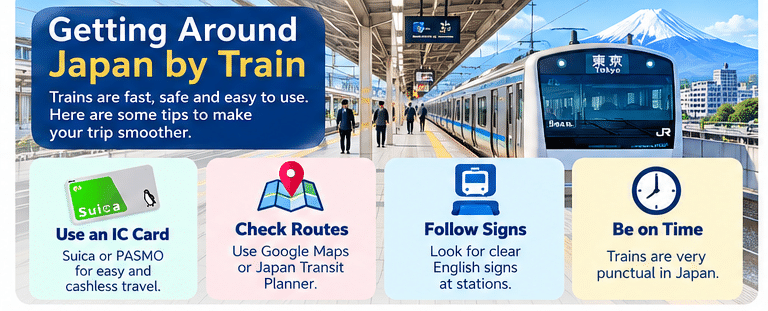
Japan has an extensive train and public transport network. In major cities, trains and subways are usually the easiest way to get around. For regional trips, limited express trains, local railways, highway buses, and local buses are often useful.
Before traveling, check your route, transfer stations, platform information, and the latest timetable. Some regional destinations have much less frequent service than Tokyo or Osaka, so checking the return trip in advance can save time.
For an official overview, see the Japan National Tourism Organization transportation guide.
IC Cards
Rechargeable IC cards such as Suica and PASMO make everyday travel easier. They can be used on many trains, subways, and buses, and are also accepted at many convenience stores and vending machines. Coverage is broad, but not every railway or bus line accepts every card.
Helpful official references: JNTO IC Travel Cards and PASMO for Visitors.
For a real route example, see our How to Get to Kawagoe from Tokyo guide, which compares Tobu, Seibu, and JR options.
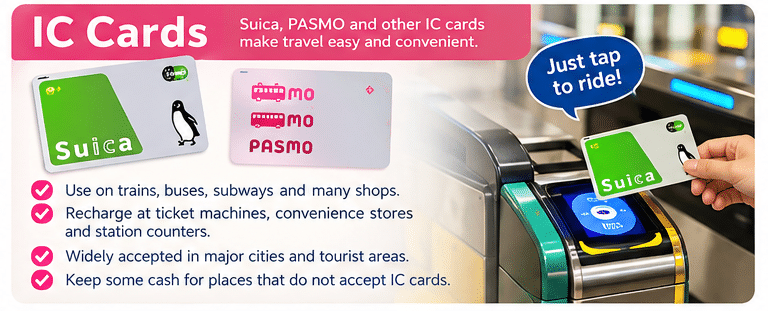
- Suica and PASMO work on many trains, buses and at shops.
- Check your balance before tapping through the gate.
- Keep some cash for routes or businesses that do not accept IC cards.
Day Trips from Tokyo
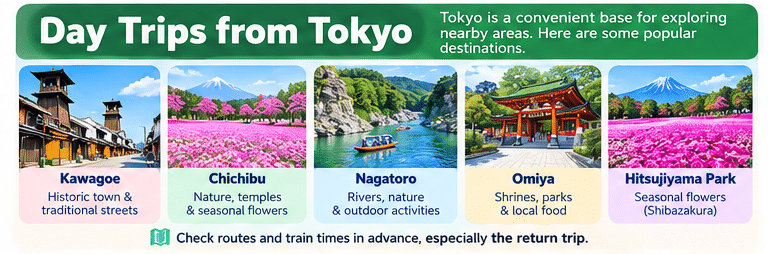
Tokyo is a convenient base for exploring nearby areas without changing hotels. Saitama is especially easy for day trips, with destinations such as Kawagoe, Chichibu, Nagatoro, Omiya, and Hitsujiyama Park.
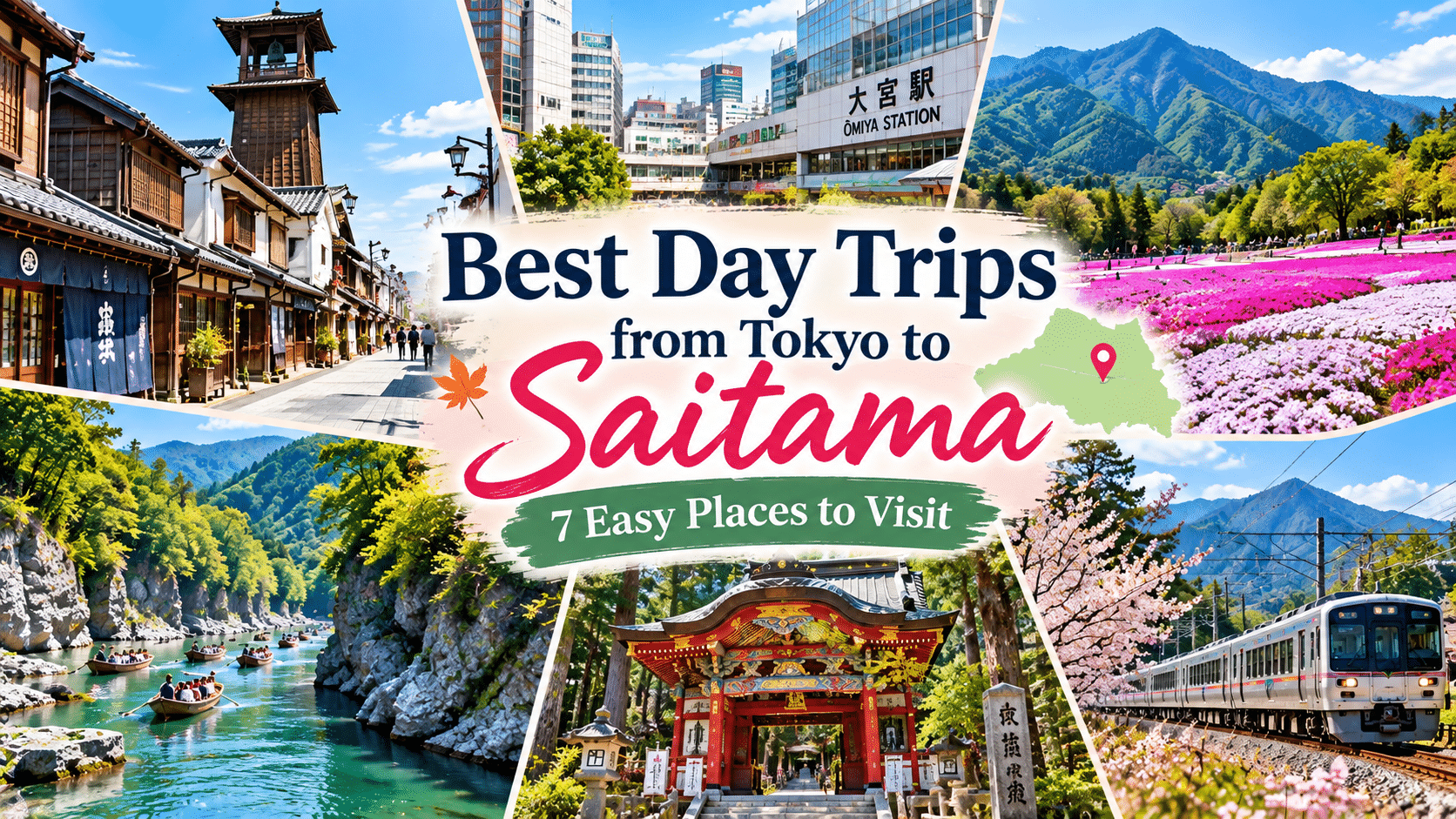
Start with our Best Day Trips from Tokyo to Saitama guide, or browse our full Destinations page.
- Save your destination and return station in Google Maps.
- Check the last train or bus before leaving Tokyo.
- Allow time for walking between sights and stations.
Best Apps & Maps for Getting Around Japan
Maps are especially useful in Japan because large stations can have many exits, underground passages, and connecting lines. Save your hotel, nearest station, and a few key destinations before you start the day.
Quick Google Maps links
Best tools for getting around Japan
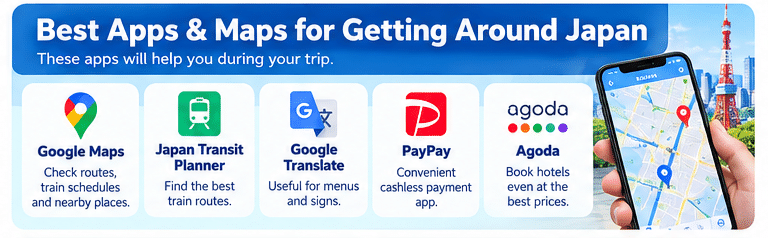
Google Maps — best for walking directions, station locations, nearby restaurants, hotels, attractions, and simple train routes. It is especially useful after you arrive at a station and need the correct exit or walking route.
Japan Transit Planner by Jorudan — best for detailed train routes, transfers, timetables, and fares in English. This is the most useful companion to Google Maps when you want to compare rail options.
Japan Travel by NAVITIME — a useful alternative for trains, buses, transport passes, route planning, and itinerary ideas.
Simple recommendation: use Google Maps for walking and nearby places, then check Jorudan when you need more detailed train information.
Travel Budget Tips
Your Japan travel budget depends on accommodation, transport, food, shopping, and sightseeing. A simple approach is to estimate your major costs first, then leave some room for spontaneous meals, souvenirs, and day trips.
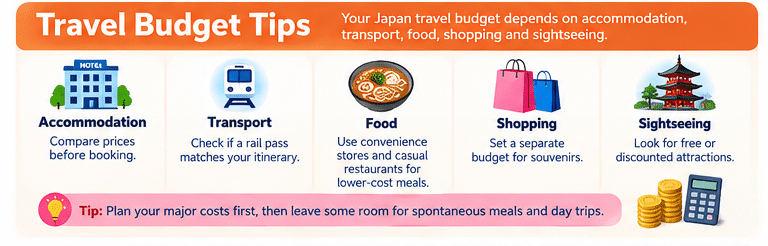
- Compare accommodation prices before booking.
- Check whether a rail or transport pass actually matches your itinerary.
- Use convenience stores, supermarkets, and casual restaurants for lower-cost meals.
- Keep some cash available for smaller shops, temples, shrines, and rural areas.
- Set a separate shopping and souvenir budget so it does not eat into transport or food money.
For more ideas, read 10 Easy Ways to Save Money in Japan and our Budget-Friendly Supermarkets in Japan guide.
Cash, Cards & Payments
Credit cards and mobile payments are widely accepted in cities, hotels, department stores, and chain restaurants. However, some small businesses, temples, shrines, ticket machines, and rural locations may still prefer cash.
ATMs at major convenience stores and post offices can be useful for international visitors, but availability and fees depend on the card issuer. Keeping a modest amount of yen as backup is practical.
Best Time to Visit Japan
Each season offers a different experience. Spring is famous for cherry blossoms and flowers, summer brings festivals and mountain greenery, autumn is known for colorful foliage, and winter is popular for snow scenery, hot springs, and seasonal food.
Weather varies greatly by region, so check the forecast for the exact destination rather than relying only on a national forecast. For official forecasts and warnings, use the Japan Meteorological Agency weather forecast.
- Check the forecast for each city on your itinerary.
- Bring a compact umbrella and comfortable walking shoes.
- Pack layers for changing temperatures and air-conditioned trains.
What to Pack
Pack for the season and the places you plan to visit. Comfortable walking shoes are especially important because many Japan trips involve long walking days, station stairs, transfers, temple grounds, and uneven paths.
- Comfortable walking shoes
- Weather-appropriate layers
- Compact umbrella or rain jacket
- Portable phone charger
- Reusable water bottle
- Small amount of cash
- Travel documents and reservation details
- Medication and any essential personal items
Internet & Navigation
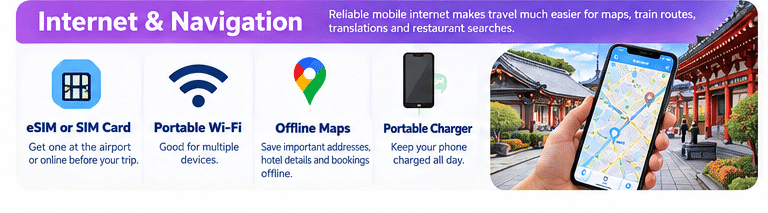
Reliable mobile internet makes travel much easier for maps, train routes, translations, restaurant searches, and booking information. Common options include an eSIM, physical SIM card, portable Wi-Fi, or your home carrier’s roaming plan.
Save important addresses, hotel details, and booking confirmations offline before leaving your accommodation. This is especially useful in mountain and rural areas where reception may be weaker.
Travel Etiquette
A few simple habits can make travel smoother and more respectful.
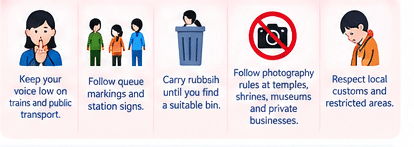
- Keep your voice low on trains and public transport.
- Follow queue markings and station signs.
- Carry rubbish until you find a suitable bin.
- Follow photography rules at temples, shrines, museums, and private businesses.
- Do not block narrow streets, shop entrances, or station passageways when taking photos.
- Respect local customs and restricted areas.
Official Travel Resources

Keep Exploring Japan
For destination-specific planning, browse our Japan Destinations page. If you are starting with an easy trip from Tokyo, our Kawagoe Day Trip from Tokyo guide is a practical place to begin.