Kyoto 2 Day Itinerary: The Perfect First-Time Visitor Guide (2026)
Kyoto is packed with famous temples, historic streets, peaceful gardens, and incredible food. If you have just two days, the key is to group nearby sights together rather than spend your trip crossing the city. This first-time Kyoto itinerary covers the highlights at a comfortable pace, with time for meals, photos, and unplanned discoveries.
Table of Contents
Kyoto 2-Day Itinerary at a Glance
| Day | Area | Highlights |
|---|---|---|
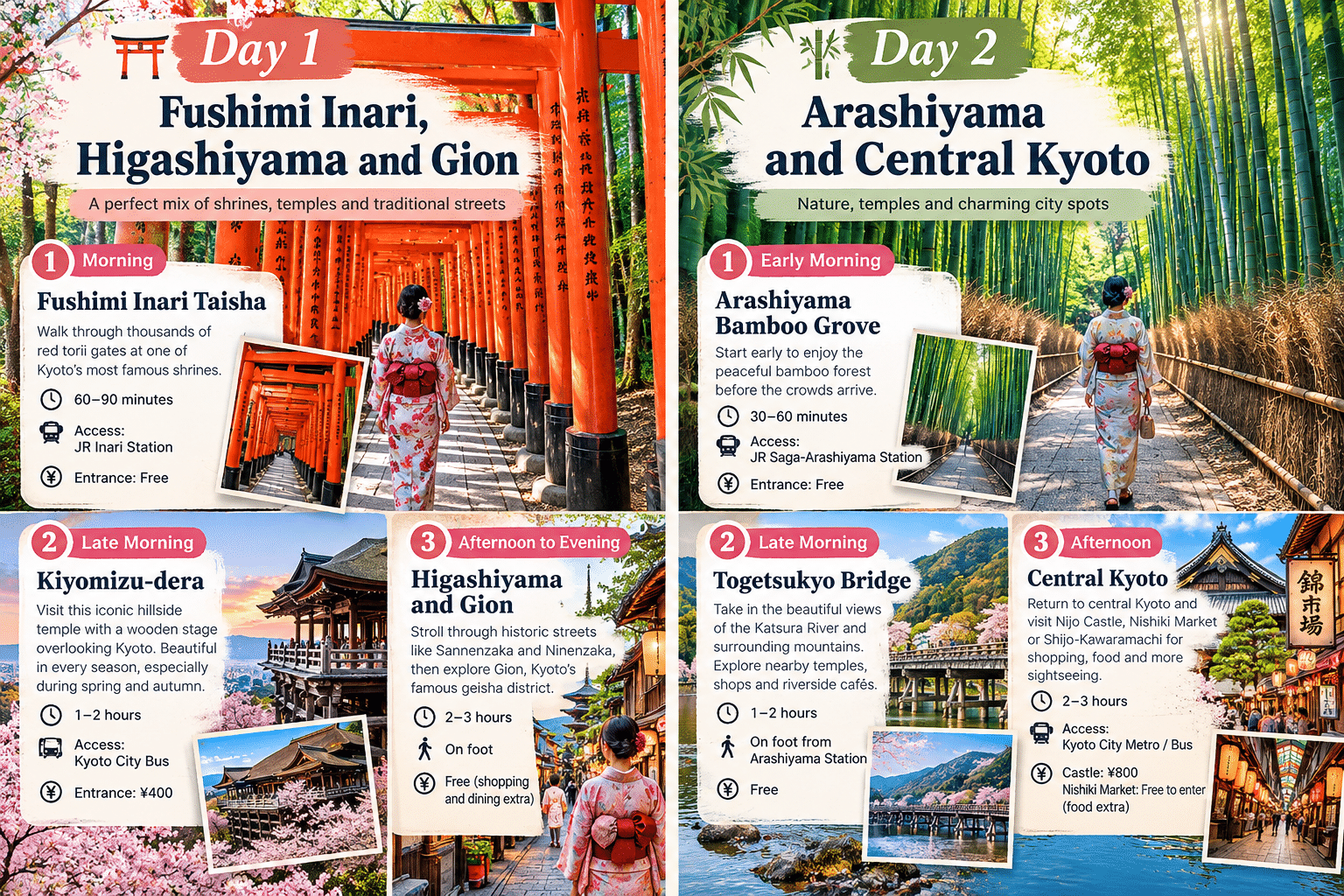
| Day 1 | Southern and Eastern Kyoto | Fushimi Inari, Kiyomizu-dera, Sannenzaka, Ninenzaka, Gion |
| Day 2 | Western and Central Kyoto | Arashiyama Bamboo Grove, Togetsukyo Bridge, Nishiki Market, central Kyoto |
Day 1: Fushimi Inari, Higashiyama and Gion
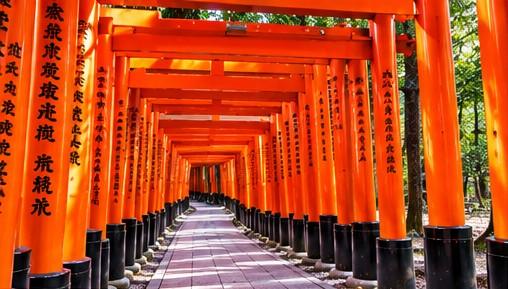
Morning: Walk Through Fushimi Inari’s Torii Gates
Start early at Fushimi Inari Taisha, famous for its thousands of red torii gates. The paths closest to the entrance are often busiest; walking farther uphill can be more peaceful. Allow around 60–90 minutes for a shorter visit, or longer if you want to hike toward the summit.
Access: JR Inari Station is close to the shrine entrance. The main shrine grounds are generally free to enter.
Late Morning: Explore Kiyomizu-dera
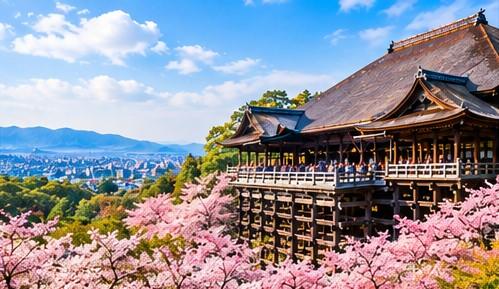
Travel toward eastern Kyoto and visit Kiyomizu-dera, one of the city’s most recognizable hillside temples. Its wooden stage overlooks Kyoto and is particularly beautiful during spring and autumn. Check the official temple website for current admission and opening times.
Afternoon: Sannenzaka and Ninenzaka
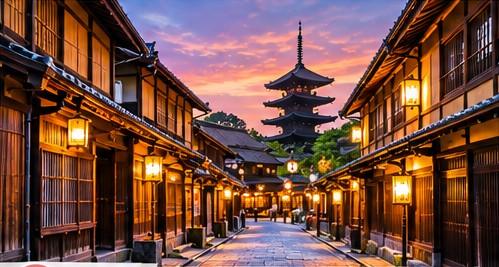
Walk down the traditional streets of Sannenzaka and Ninenzaka. Take your time browsing small shops, enjoying matcha sweets, and admiring the preserved wooden buildings. These streets can be crowded, so be considerate of residents and avoid blocking narrow pathways for photos.
Evening: Gion and Yasaka Shrine
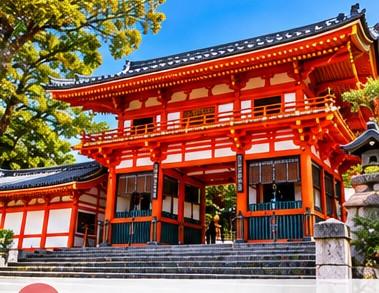
Finish the day around Yasaka Shrine and Gion. The lantern-lit streets are especially atmospheric around dusk. Stay on public roads, respect private-property signs, and do not photograph people without permission. Choose a nearby restaurant for a relaxed Kyoto-style dinner.
Day 2: Arashiyama and Central Kyoto
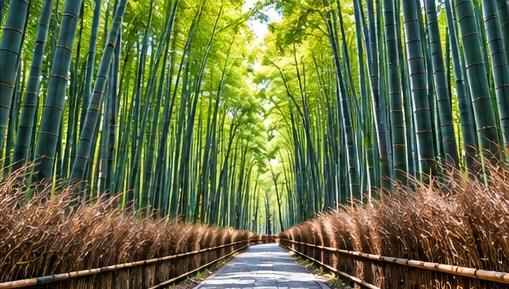
Early Morning: Arashiyama Bamboo Grove
Begin in Arashiyama before the busiest sightseeing hours. Walk through the towering bamboo, then explore the surrounding neighborhood. JR Saga-Arashiyama Station is a convenient starting point for many visitors.
Late Morning: Togetsukyo Bridge and Riverside Walk
Continue toward Togetsukyo Bridge for mountain and river views. If time allows, add a nearby temple or garden rather than rushing across Kyoto for another distant attraction. Enjoy lunch in Arashiyama before heading back toward the center.
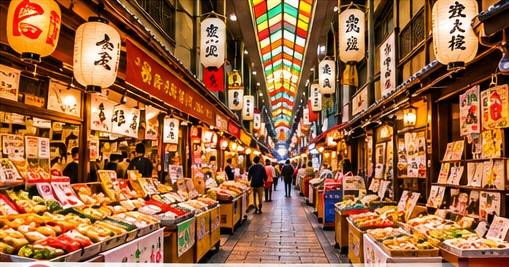
Afternoon: Nishiki Market
Browse Nishiki Market for Kyoto snacks, pickles, sweets, and local specialties. Some stalls have designated places to eat; follow each shop’s guidance rather than eating while walking through the busy market.
Evening: Shopping and Dinner in Central Kyoto
Spend your final evening exploring the Shijo-Kawaramachi area, relaxing at a café, or trying a local restaurant. This flexible ending makes it easy to adjust the itinerary if you spent longer at a favorite sight earlier in the day.
How to Get Around Kyoto
- Trains: Useful for Fushimi Inari and Arashiyama.
- Subway and buses: Helpful for central and eastern Kyoto; buses may be crowded.
- Walking: Often the best way to explore Higashiyama and Gion.
- IC cards: Widely useful for public transport, though acceptance can vary by service.
Check current routes, service changes, and fares before setting out. Allow extra travel time during cherry blossom season, autumn foliage season, and weekends.
Estimated Budget for Two Days
For a budget-conscious traveler, a planning allowance of approximately ¥4,000–¥8,000 per person per day for local transport, casual meals, snacks, and some admissions may be reasonable, excluding accommodation and travel to Kyoto. Your actual spending will depend on restaurant choices, paid attractions, and shopping; this is a planning estimate, not a quoted package price.
Where to Stay for a Short Kyoto Trip
Kyoto Station is convenient for arrivals, departures, and rail connections. Shijo-Karasuma is a useful central base for restaurants and public transport, while Gion and Higashiyama offer atmospheric surroundings, often at higher prices. Book early for peak spring and autumn travel dates.
Tips on Traveling in Kyoto
- Start popular attractions early, but leave time for breaks.
- Wear comfortable shoes for slopes, steps, and cobbled streets.
- Carry water and dress for the season.
- Keep luggage light on crowded buses and trains.
- Check official attraction websites for up-to-date hours and admission prices.
- Respect local residents and photography restrictions.
Frequently Asked Questions
Is two days enough for Kyoto?
Two days is enough to see several major highlights, but not every attraction. This itinerary focuses on two practical sightseeing areas so you can enjoy the city without constantly rushing.
Do I need a car in Kyoto?
No. Most first-time visitors can use trains, buses, and walking. A car is often less convenient in central sightseeing areas because of traffic and parking.
What is the best area to stay in Kyoto?
Kyoto Station is practical for rail travel, while Shijo-Karasuma offers a central location with restaurants and transport options.
Plan Your Next Japan Adventure
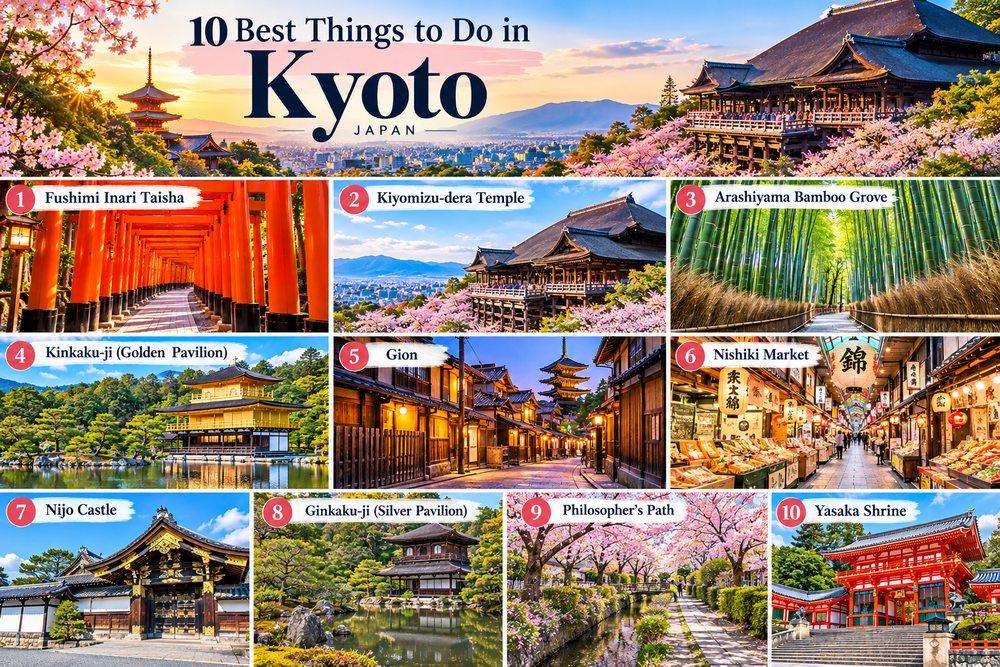
Want more places to add to your trip? Read our 10 Best Things to Do in Kyoto guide for additional attractions, practical access tips, and sightseeing inspiration.