
8 Best Things to Do in Nara, Japan (2026 Travel Guide)
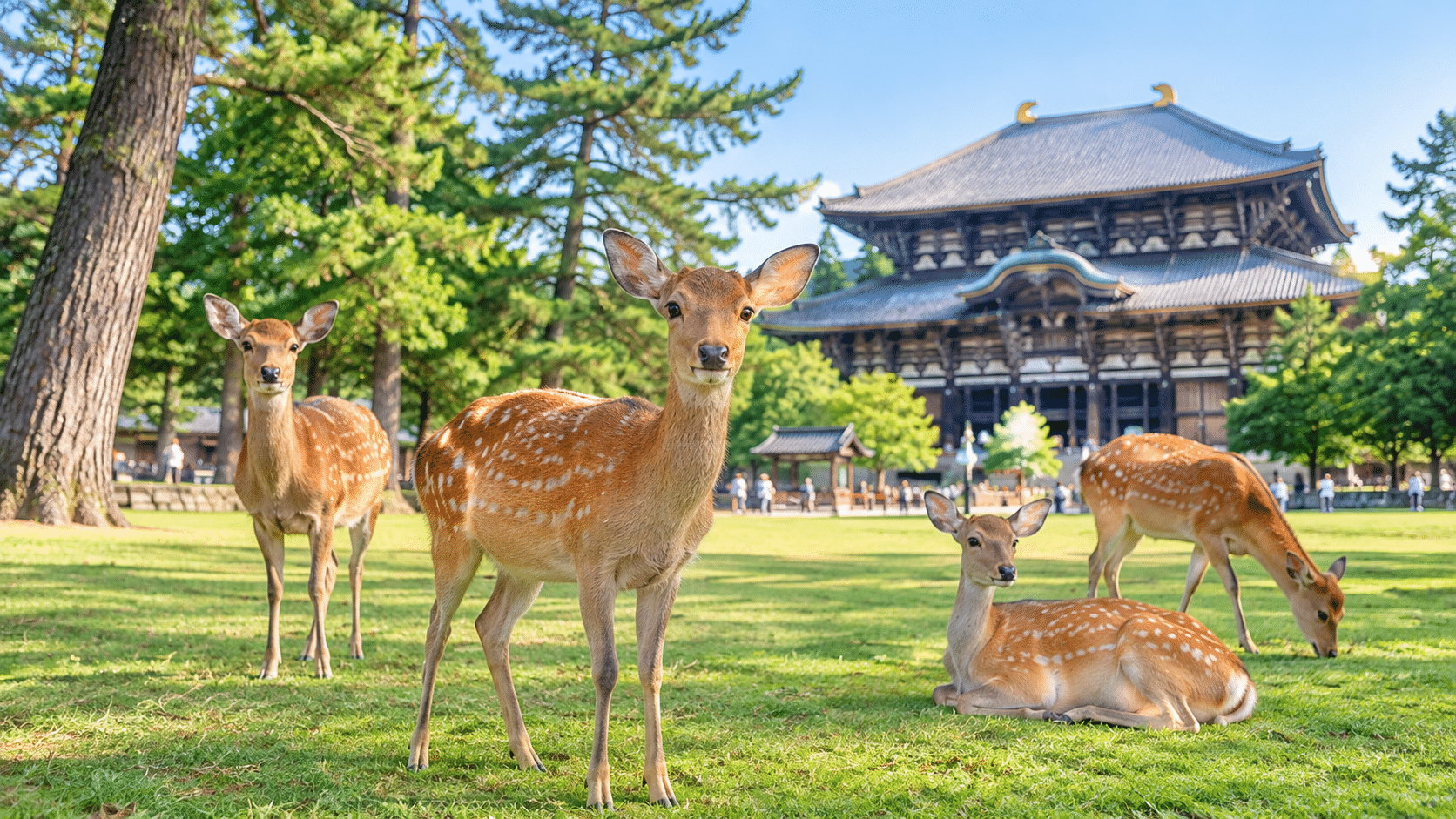
Nara was Japan’s first permanent capital, and it still feels like a step back in time. Ancient temples, a huge bronze Buddha and more than a thousand free-roaming deer all sit within walking distance of each other in one large park.
Because Nara is compact and close to Osaka and Kyoto, it works well as a day trip. Even so, many travelers wish they had stayed longer once they arrive.
In this guide, discover 8 of the best things to do in Nara, plus how to get there, how much time you need, what to eat and a simple one-day itinerary.
Nara at a Glance
- Best for: History, temples, the famous deer and relaxed walking
- Time needed: One full day for the main sights, or an overnight stay to enjoy quiet mornings
- From Osaka: About 40 minutes by Kintetsu Rapid Express from Osaka-Namba
- From Kyoto: About 35–45 minutes by Kintetsu or JR
- Getting around: On foot. Most major sights are inside or beside Nara Park
1. Meet the Deer in Nara Park
Best for: Families, photography and a uniquely Nara experience
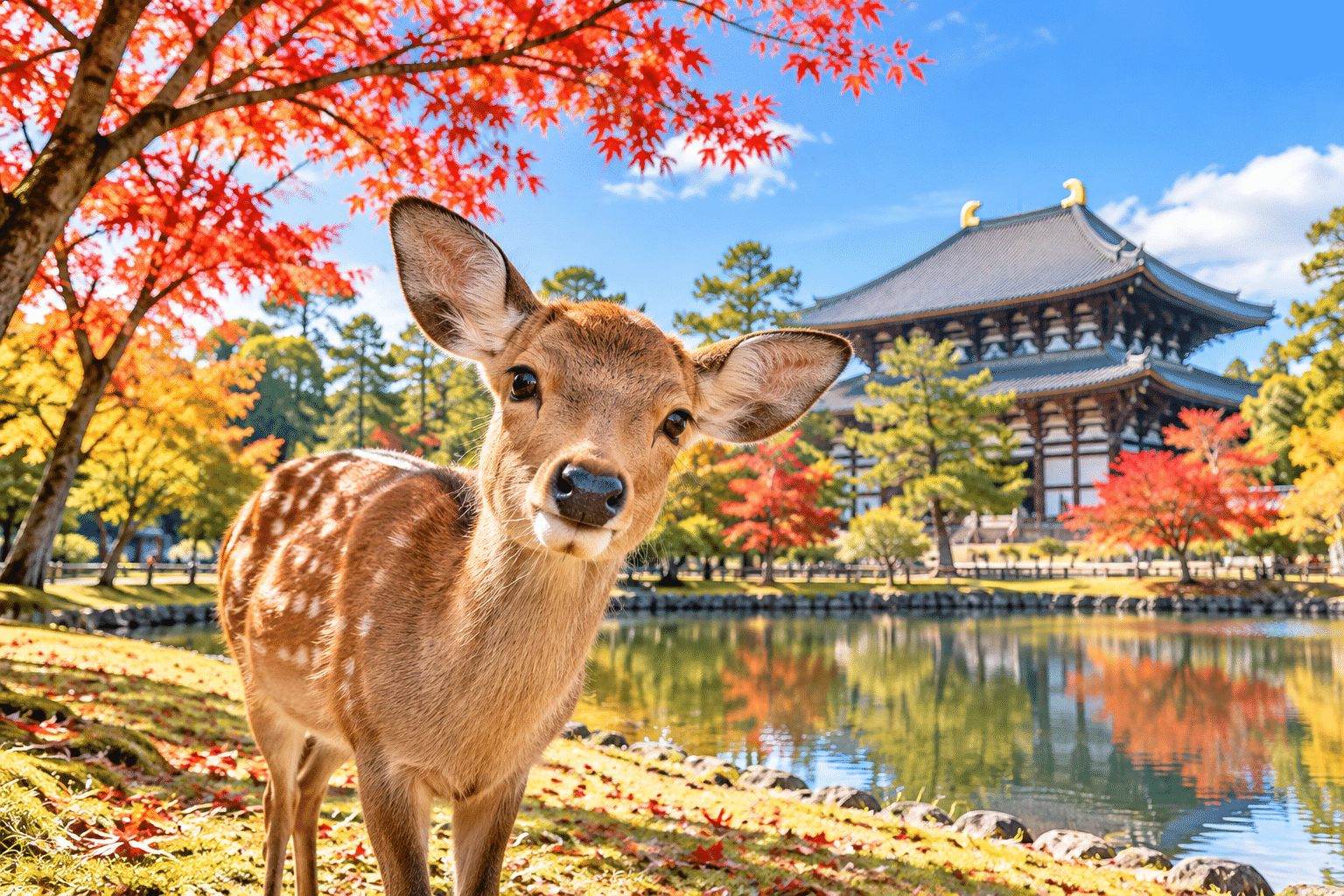
Nara Park is home to well over a thousand deer, which are protected as a national natural treasure. They wander freely across the lawns, temple approaches and even the sidewalks.
Vendors around the park sell shika senbei, special deer crackers, for about 200 yen. Some deer have learned to bow their heads before asking for food, which makes for a memorable moment.
What to do:
- Buy a pack of deer crackers and feed the deer gently.
- Walk the open lawns between Todai-ji and Kasuga Taisha.
- Visit early in the morning, when the deer are calmer and the park is quieter.
Suggested time: 30–60 minutes, though you will meet deer all day.
2. See the Great Buddha at Todai-ji
Best for: History, architecture and one of Japan’s most impressive sights
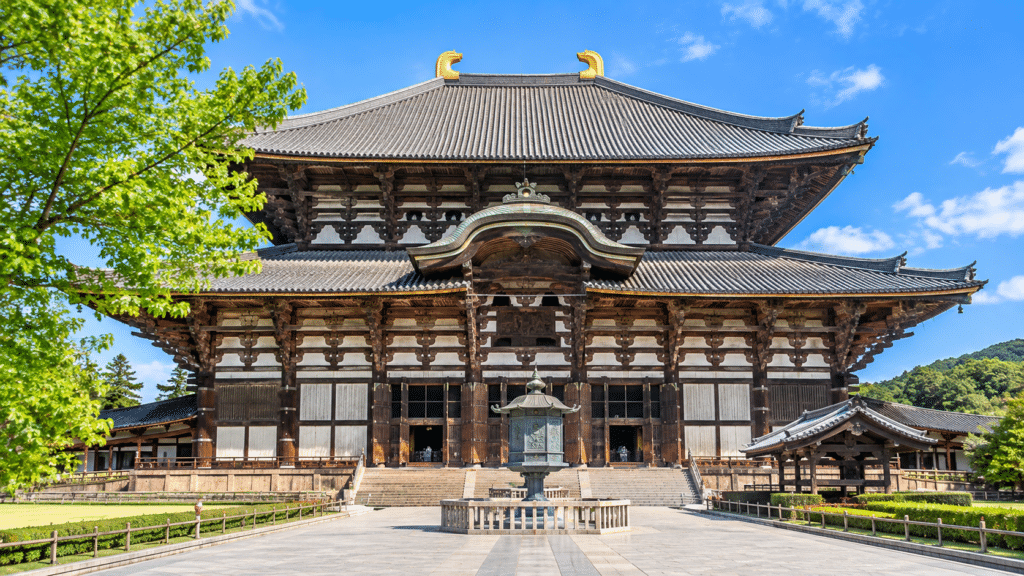
Todai-ji is Nara’s signature temple. Its Great Buddha Hall (Daibutsuden) is one of the largest wooden buildings in the world, and inside sits a bronze Buddha about 15 meters tall.
Even the walk in is impressive. You pass through the giant Nandaimon Gate, guarded by two fierce wooden statues, before the hall comes into view.
What to do:
- See the Great Buddha and the guardian statues inside the hall.
- Look for the wooden pillar with a hole at its base. Squeezing through is said to bring good luck.
- Combine your visit with the Todai-ji Museum on a joint ticket.
Admission: 800 yen for adults for the Great Buddha Hall, or 1,200 yen including the Todai-ji Museum. Payment at the main entrance is cash only.
Suggested time: 1–1.5 hours.
3. Walk the Lantern Paths of Kasuga Taisha
Best for: Atmosphere, forest walks and Shinto culture
Kasuga Taisha is Nara’s most important shrine, known for its bright vermilion buildings and around 3,000 stone and bronze lanterns. The approach winds through a quiet primeval forest, which feels a world away from the busy park.
Twice a year, during special lantern festivals, the lanterns are lit in the evening.
What to do:
- Walk the lantern-lined approach through the forest.
- Visit the main shrine area with its vermilion corridors.
- Look for deer-shaped fortune papers and charms.
Suggested time: 1 hour.
4. Visit Nigatsu-do for the View
Best for: Views, quieter corners and sunset
Nigatsu-do is a hillside hall within the Todai-ji grounds. Its wooden veranda looks out over the roof of the Great Buddha Hall and the city of Nara, and visiting is free.
The stone-paved slope leading up to it, lined with old walls and buildings, is one of the most photogenic walks in the city.
Suggested time: 30–45 minutes.
5. See Kofuku-ji Temple
Best for: Buddhist art and a quick stop near the station
Kofuku-ji sits right between Kintetsu Nara Station and the park, so most visitors pass through its grounds. The temple’s National Treasure Museum holds some of Japan’s most famous Buddhist statues.
Its iconic five-story pagoda is currently under a long-term restoration and covered for several years, so do not plan your visit around photographing it.
Suggested time: 30–60 minutes.
6. Relax in Isuien Garden
Best for: Japanese gardens and a peaceful break
Isuien is a traditional strolling garden near Todai-ji. It uses the technique of borrowed scenery, so the roofs of Todai-ji and the hills behind it become part of the view.
It is a calm place to rest between temple visits, especially in autumn.
Suggested time: 45 minutes.
7. Explore Naramachi
Best for: Old streets, cafés and local shops
Naramachi is Nara’s old merchant quarter, just south of Sarusawa Pond. Narrow lanes are lined with traditional wooden townhouses, small museums, craft shops and cafés.
It is a good place to finish the day, after the temples close.
Suggested time: 1–2 hours.
8. Climb Mount Wakakusa
Best for: Panoramic views and a short hike
Mount Wakakusa is a grassy hill on the east side of Nara Park. A short but steep climb rewards you with wide views over the city and the Nara Basin.
The hill trail is open seasonally, typically from spring to autumn, so check the opening period before you go.
Suggested time: 1–1.5 hours.
How to Get to Nara
Nara has two main stations about 15 minutes apart on foot. Kintetsu Nara Station is closer to Nara Park and the main sights.
- From Osaka: Take the Kintetsu Nara Line Rapid Express from Osaka-Namba to Kintetsu Nara, about 40 minutes and around 680 yen. JR Yamatoji Rapid trains run from Osaka or Tennoji to JR Nara and are covered by the Japan Rail Pass.
- From Kyoto: Kintetsu Limited Express trains reach Kintetsu Nara in about 35 minutes (reserved seats, extra charge). The JR Nara Line Miyakoji Rapid reaches JR Nara in about 45 minutes.
- From Tokyo: Take the Shinkansen to Kyoto, then transfer to Kintetsu or JR. Allow around 3 hours in total.
An IC card such as Suica or PASMO works on both Kintetsu and JR local and rapid trains. Read our guide on how to use Suica in Japan.
What to Eat in Nara
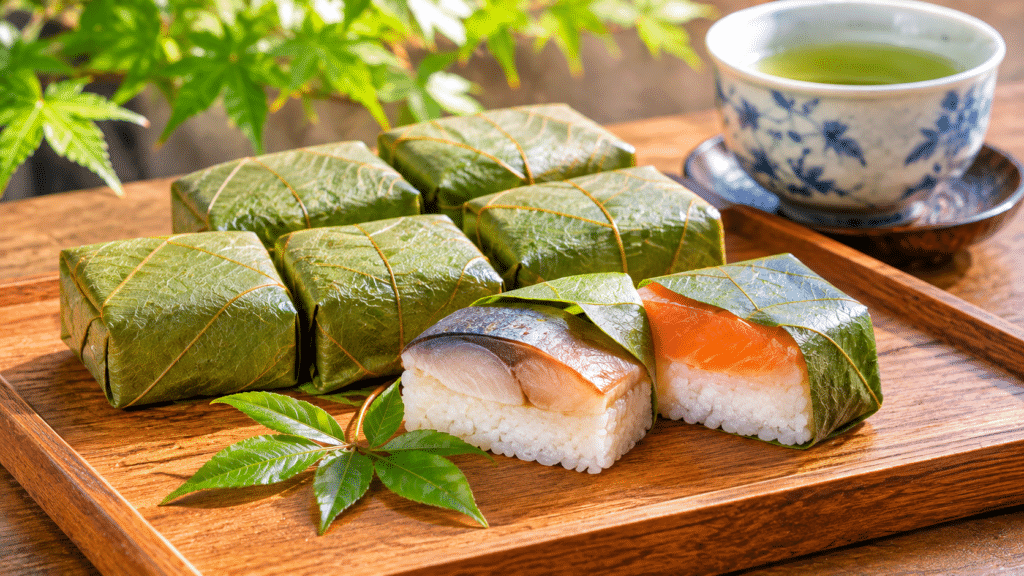
- Kakinoha-zushi: Pressed sushi wrapped in persimmon leaves, a classic Nara specialty.
- Yomogi mochi: Soft green mochi filled with sweet red bean paste, often made fresh in front of you.
- Nara-zuke: Vegetables pickled in sake lees, popular as a souvenir.
- Kuzu sweets: Desserts made with kuzu starch from the Yoshino area.
One-Day Nara Itinerary
- Morning: Arrive at Kintetsu Nara, walk through Kofuku-ji, feed the deer and visit Todai-ji early.
- Late morning: Walk up to Nigatsu-do for the view.
- Lunch: Kakinoha-zushi or a casual set meal near the park.
- Afternoon: Follow the lantern paths to Kasuga Taisha, then rest in Isuien Garden.
- Late afternoon: Wander Naramachi for cafés and souvenirs before heading back.
Best Time to Visit Nara
Spring (late March to early April) brings cherry blossoms across Nara Park. Autumn (November) is equally beautiful, with red maples around the temples and Isuien Garden. Summer is hot and humid, so start early, and winter is quiet and cold but pleasant for sightseeing.
Weekdays and early mornings are always the calmest times to visit.
Nara Travel Tips
- Wear comfortable shoes. You will walk several kilometers on gravel and slopes.
- Carry cash for temple admission and small food stalls.
- Take your rubbish with you. Deer can get sick from eating plastic.
- Many sights close around 5 pm, so start your day early.
Frequently Asked Questions
Can I visit Nara in one day?
Yes. One full day is enough for Nara Park, Todai-ji, Kasuga Taisha and Naramachi at a comfortable pace. Stay overnight if you want quiet early mornings with the deer.
Is it better to visit Nara from Osaka or Kyoto?
Both work well. From Osaka-Namba, the Kintetsu line takes you close to Nara Park in about 40 minutes. From Kyoto, Kintetsu or JR trains take 35 to 45 minutes.
Do I need to pay to enter Nara Park?
No. Walking through Nara Park is free. Some temple halls, museums and gardens charge admission.
Are the Nara deer dangerous?
They are usually gentle but can push, nip or chase when they want food. Feed them only official deer crackers and keep children close.
For more practical advice, see our Japan travel tips and Japan travel etiquette guides. Nara also pairs well with our Kyoto and Osaka guides, or browse all destinations.