Coin Lockers in Japan: 7 Ultimate Tips for Easy Luggage Storage
Coin lockers in Japan are self-service luggage storage boxes found at many Japanese train stations, airports and shopping areas. Choose a locker that fits your bag, pay at the machine or lock, keep the key or receipt, and return before the posted deadline. Some lockers accept Suica or other supported transit IC cards; others require coins.
If you arrive before hotel check-in, have several hours between trains, or want to explore a city without carrying a suitcase, a coin locker can make your day much easier.
Where can you find coin lockers in Japan?
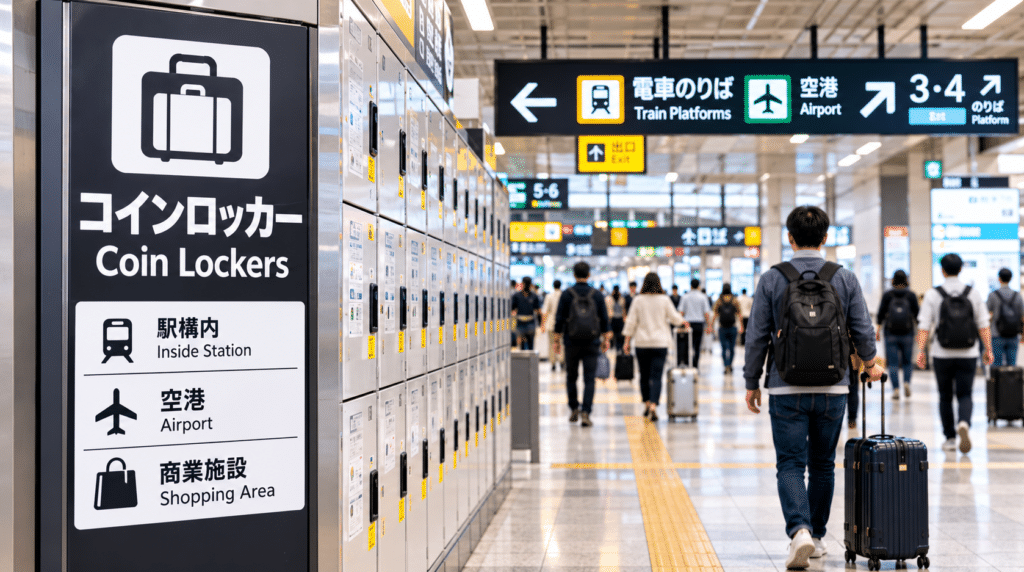
Start at major railway stations. Look for signs reading Coin Lockers, Locker, or コインロッカー. You may find them near station exits, concourses, underground passages and shopping areas.
Not every locker is inside the ticket gates. Check whether you can reach it without buying a train ticket, especially if you plan to return after sightseeing.
At large stations, lockers may be spread across several floors and exits. Take a photo of the nearest exit number, station map and locker bank before leaving.
How much do coin lockers cost?
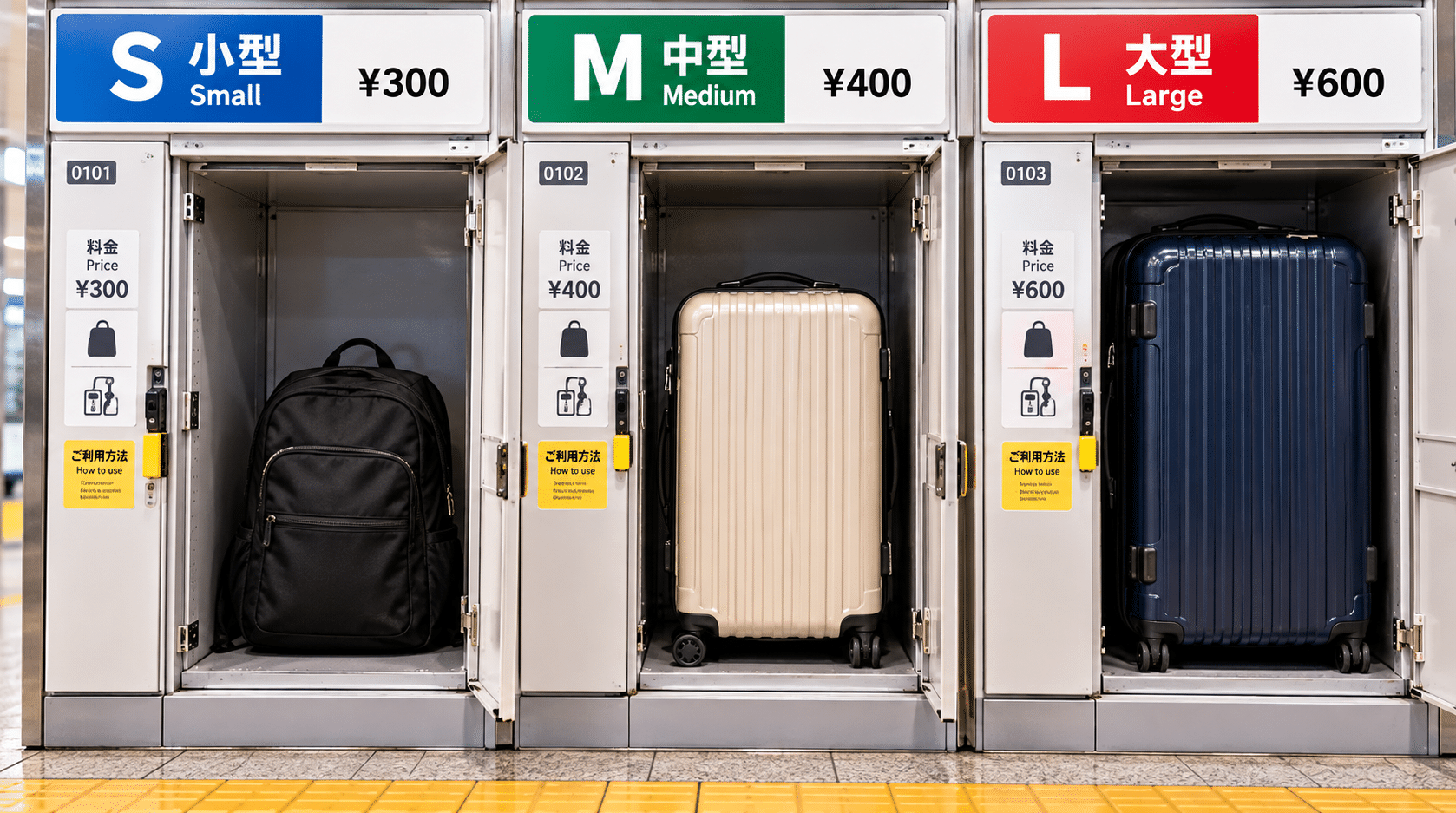
Prices depend on the location, locker size and operator. The Japan National Tourism Organization’s luggage-storage guide gives roughly ¥300–¥600 as a general reference, but larger or newer lockers may cost more. Always check the current price on the locker itself.
| Locker size | Typical use | What to check |
|---|---|---|
| Small | Handbag or small backpack | Depth and door opening |
| Medium | Day bag or compact carry-on | Handle and wheel clearance |
| Large / extra-large | Suitcase, where available | Actual interior dimensions and availability |
How to use a coin locker: step by step
Option A: A traditional locker with a physical key
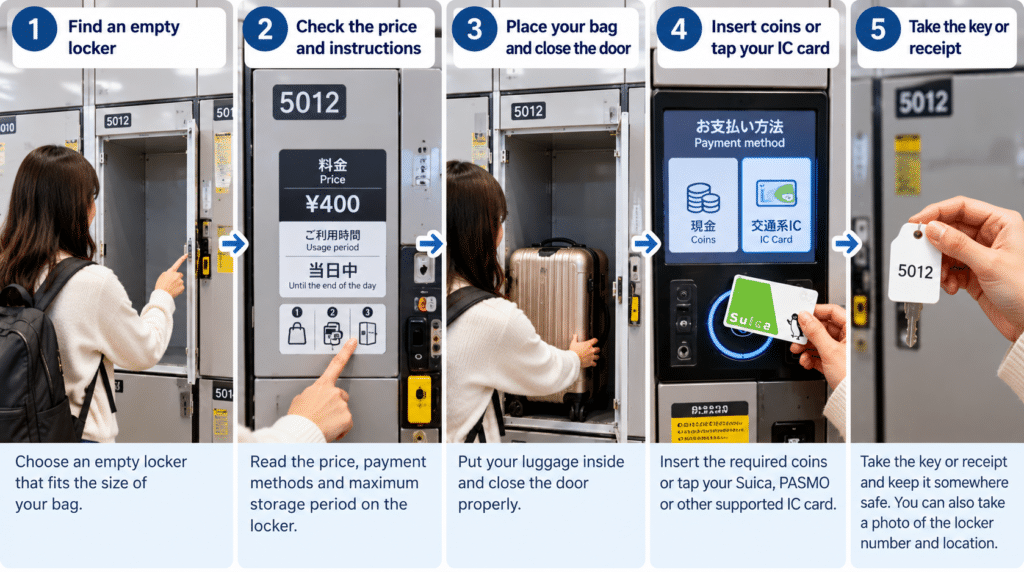
- Find an empty locker large enough for your bag.
- Read the price, payment instructions and maximum storage period.
- Place your bag inside and close the door.
- Insert the required coins and follow the lock instructions on the door.
- Take the key and keep it somewhere safe. Photograph the locker number and location.
When you return, use the same key. If additional fees are due, follow the instructions on the locker or ask the operator for help.
Option B: A touchscreen locker that accepts an IC card
- Choose an available compartment and put your luggage inside.
- Close the door and follow the screen instructions.
- Select a supported payment method, such as a transit IC card where available.
- Tap the same physical card or device you will bring back to retrieve your luggage, if the machine uses it as the key.
- Keep the receipt or confirmation and photograph the locker location.
For compatible lockers, JR East explains how Welcome Suica works as both payment and locker key. Exact screens and procedures vary by machine.
Important: If you used a phone-based transit card, bring the same phone back, with enough battery to unlock the locker. Do not assume a different card or phone will work.
Can you pay with Suica, PASMO or cash?
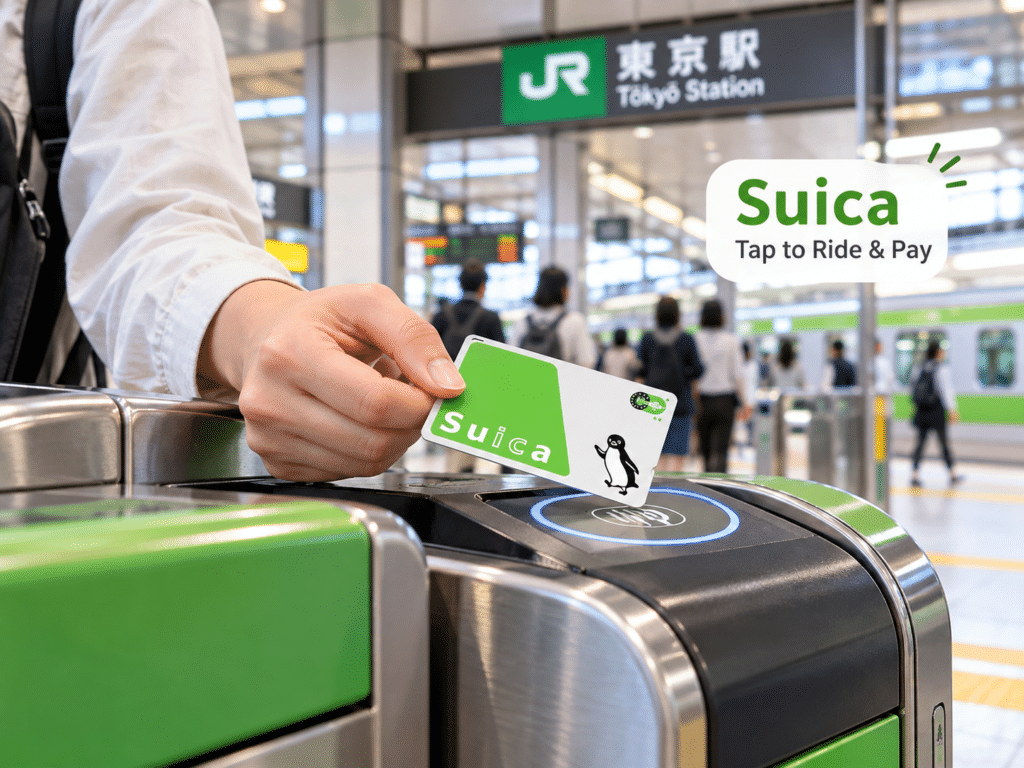
It depends on the locker. Many modern touchscreen lockers support transit IC cards, while some older lockers only accept ¥100 coins. Look for the payment symbols displayed on the machine.
Already using Suica on your trip? Read our beginner’s guide to using Suica in Japan for recharging and other everyday uses.
Do not mix cash and IC card payment unless the locker explicitly supports it. JR East notes that its Welcome Suica locker instructions do not allow a split payment.
When does a locker day end?
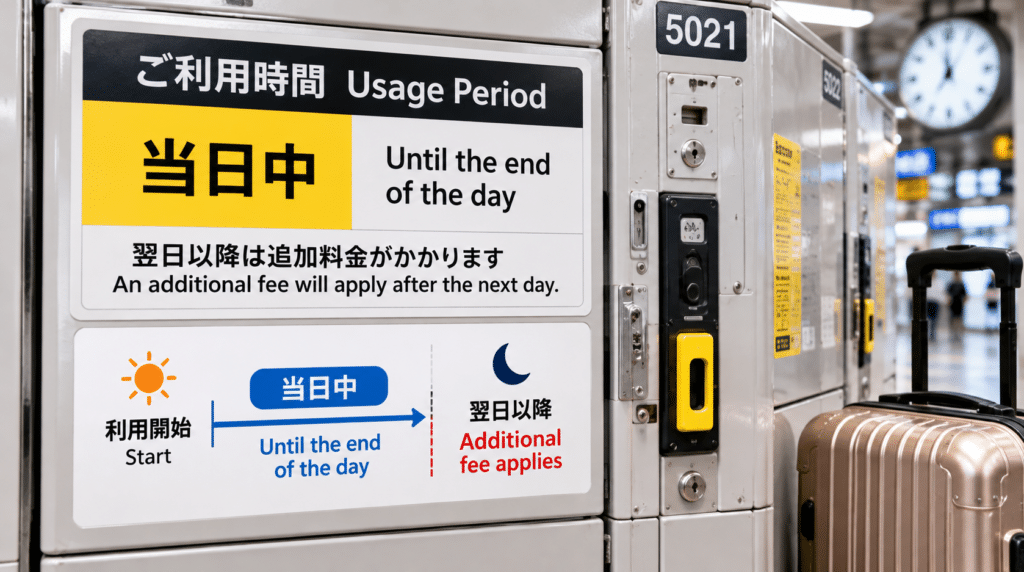
This is one of the easiest details to miss. Some lockers charge by a calendar-day cutoff rather than by a full 24 hours from the moment you pay. You might owe an additional fee the next morning even if your bag has been stored for less than a day.
Read the posted cutoff time, maximum storage period and rules for overnight storage. These vary by operator. If you will be away for several days, consider staffed luggage storage or delivery instead of assuming a locker can hold your bag that long.
What if the lockers are full?
Busy stations and popular tourist areas can run out of larger lockers, especially during holidays and weekends. Try another station exit, a different floor, a nearby station or a staffed luggage counter.
For a larger suitcase or a hotel-to-hotel transfer, compare a staffed counter with a luggage delivery service. See the official JNTO overview of storage and hands-free travel for alternatives.
If you are arriving at an airport, our guides explain onward transport: Narita Airport to Tokyo and Haneda Airport to Tokyo.
Common mistakes to avoid
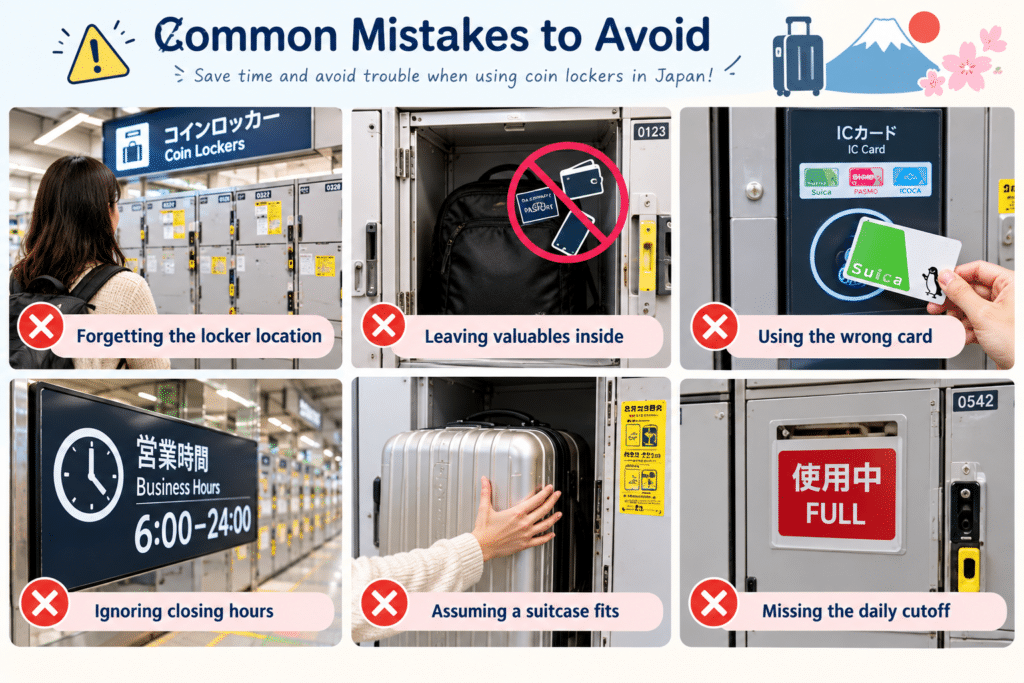
- Forgetting the locker location: Take a photo of the locker bank, number, station exit and nearby landmark.
- Leaving valuables inside: Keep passports, medication, money and important documents with you.
- Using a card you cannot retrieve later: Some IC lockers use the same card as the key.
- Ignoring closing hours: A locker may be inside a building or passage that closes overnight.
- Assuming a suitcase fits: Measure your bag and check the available compartment dimensions.
- Missing the daily cutoff: Extra charges may apply sooner than expected.
A practical example: a day trip from Tokyo
Suppose you are checking out of a Tokyo hotel in the morning and want to visit Kawagoe before your next train. If your hotel cannot hold your luggage, you could look for a suitable locker at a station you will return to later.
Choose the station carefully: returning to a locker on the opposite side of Tokyo can waste time and train fares. Our Tokyo-to-Kawagoe transport guide helps you plan the journey before deciding where to store your bags.
Quick questions
Are coin lockers safe?
They are widely used, but no storage option is risk-free. Follow the operator’s rules and do not leave irreplaceable or high-value items inside.
Can I leave luggage overnight?
Sometimes, but check the specific machine’s permitted storage period, daily charging cutoff and access hours. Rules differ between locations.
What if I lose my key or receipt?
Look for the operator’s contact information on the locker bank. Staff may require identity verification and may charge a replacement or service fee. Do not try to force the lock.
Do all lockers accept credit cards?
No. Payment options vary; some take only coins or transit IC cards. Check before placing your luggage inside.
Before you leave your bag: a 30-second checklist
Check the locker size, displayed price, payment method, pickup deadline, station exit, and how you will unlock it. Keep your key, receipt or IC card safe. With those details covered, you can explore Japan hands-free and spend less time worrying about your luggage.
Continue Planning Your Japan Trip
Make your Japan trip easier with these practical TrendyLife guides for transport, luggage, IC cards, and easy day trips.
IC cards & payments ✈️ Narita to Tokyo
Airport transport 🚉 Tokyo to Kawagoe
Train routes & tips 🌸 Kawagoe Day Trip
Easy Tokyo day trip 🗾 Japan Travel Tips
Practical travel advice 📍 Explore Destinations
Find your next trip
If you are traveling with large luggage, check your station’s locker availability before sightseeing. Knowing where to store your bags can save time, especially at busy stations.