
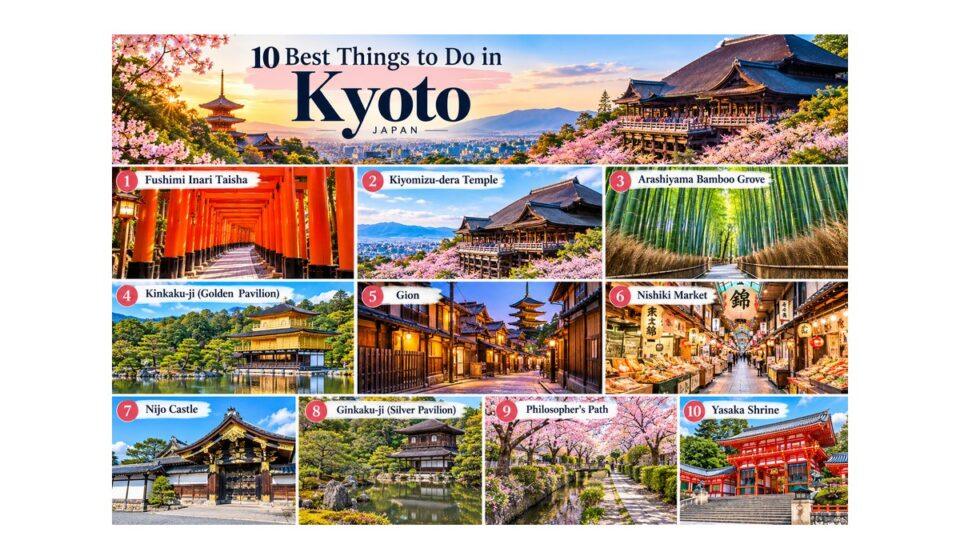
10 Best Things to Do in Kyoto, Japan (2026 Travel Guide)
Kyoto rewards slow exploration. Between hillside temples, historic streets, bamboo groves and riverside walks, Japan’s former capital offers experiences that feel different from modern Tokyo.
Table of Contents
Quick Travel Overview
Use this first-time visitor guide to choose attractions, plan transportation and organize a realistic itinerary. Check official websites for current opening hours, admission fees and seasonal restrictions before traveling.
10 Best Things to Do in Kyoto, Japan
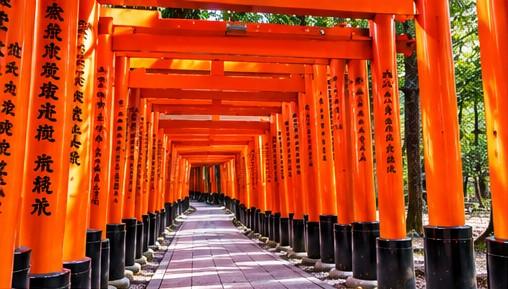
1. Fushimi Inari Taisha
Walk beneath seemingly endless red torii gates on the wooded slopes of Mount Inari. The upper paths are usually calmer than the famous entrance.
How to get there: JR Inari Station or Keihan Fushimi-Inari Station; shrine grounds are generally free.
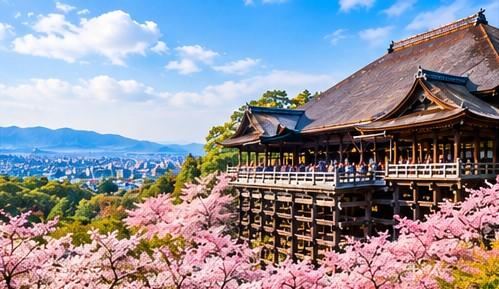
2. Kiyomizu-dera Temple
Enjoy the hillside temple’s wooden stage and broad views across Kyoto, especially in cherry blossom and autumn foliage seasons.
How to get there: Walk uphill from the Kiyomizu-michi or Gojo-zaka bus stops; admission applies.
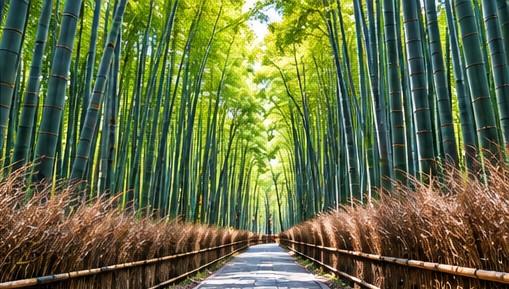
3. Arashiyama Bamboo Grove
Stroll through towering bamboo and combine the visit with nearby temples, river scenery and Togetsukyo Bridge.
How to get there: Use JR Saga-Arashiyama or the Randen Arashiyama station; the grove path is free.
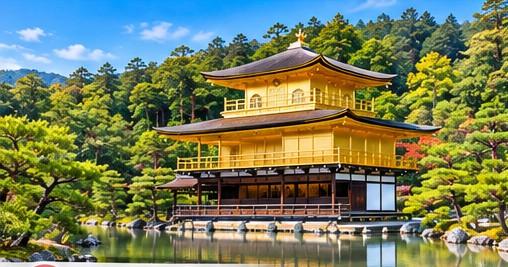
4. Kinkaku-ji (Golden Pavilion)
See the gold-covered pavilion reflected in a landscaped pond, one of Kyoto’s most recognizable sights.
Explore traditional lanes, teahouses and elegant architecture. Respect private property and local photography restrictions.
How to get there: Take a Kyoto City Bus to Kinkakuji-michi, then walk about 5 minutes to the temple; admission applies.
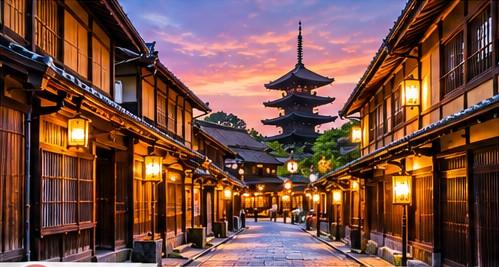
5. Gion
Explore Kyoto’s traditional streets, wooden teahouses, and historic buildings. Visit in the evening to enjoy the beautiful lantern-lit atmosphere.
How to get there: A short walk from Gion-Shijo Station; public streets are free to explore.
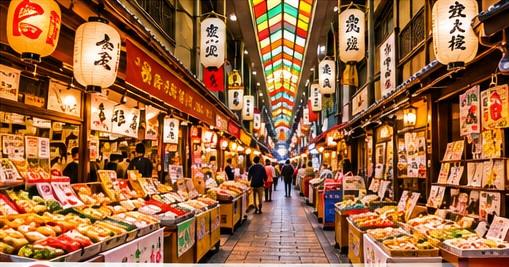
6. Nishiki Market
Sample Kyoto specialties and browse food stalls in this covered market. Eat at designated spots rather than while walking.
How to get there: A short walk from Shijo or Karasuma stations; pay for individual purchases.
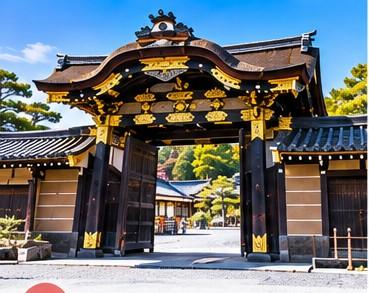
7. Nijo Castle
Discover ornate palace rooms, gardens and the history of Japan’s shoguns.
How to get there: Subway Nijojo-mae Station; admission applies.
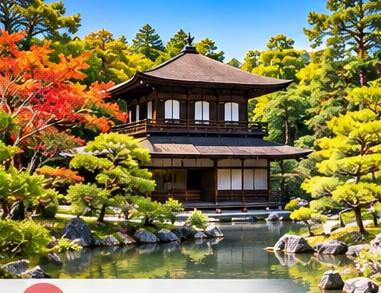
8. Ginkaku-ji (Silver Pavilion)
Admire Zen gardens, sculpted sand and a tranquil wooded hillside setting.
How to get there: Bus to Ginkakuji-michi, followed by a walk; admission applies.
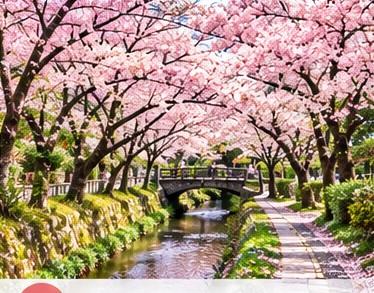
9. Philosopher’s Path
Follow a scenic canal-side walking route, especially lovely when cherry blossoms bloom.
How to get there: Combine with Ginkaku-ji and nearby temples; the walking path is free.
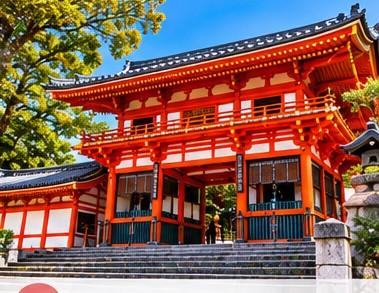
10. Yasaka Shrine and Maruyama Park
Visit the lively shrine at the edge of Gion, then relax in the adjoining park.
How to get there: Walk from Gion-Shijo Station; general shrine grounds and park access are free.
Suggested Itinerary
Day 1: Fushimi Inari early, then Kiyomizu-dera, Higashiyama, Yasaka Shrine and Gion. Day 2: Arashiyama in the morning, then Kinkaku-ji and Nijo Castle. Add Ginkaku-ji and Philosopher’s Path if you have a third day.
Tips on Traveling
Group attractions by neighborhood rather than crossing the city repeatedly. Use trains and subways when practical, and walk the final stretch. Visit popular places early and respect residents in Gion.
Frequently Asked Questions
How many days do I need in Kyoto?
Two or three days is a good introduction, while four days allows a slower pace and side trips.
Is Kyoto walkable?
Individual neighborhoods are walkable, but major attractions are spread across the city, so combine walking with rail or buses.
When is the best time to visit Kyoto?
Spring and autumn offer beautiful seasonal scenery, but they are busy. Winter and early summer can be pleasant alternatives.
Plan Your Next Japan Adventure
Explore another helpful guide: Continue planning your Japan trip →

Official tourism information: https://www.kyoto.travel/en/.